
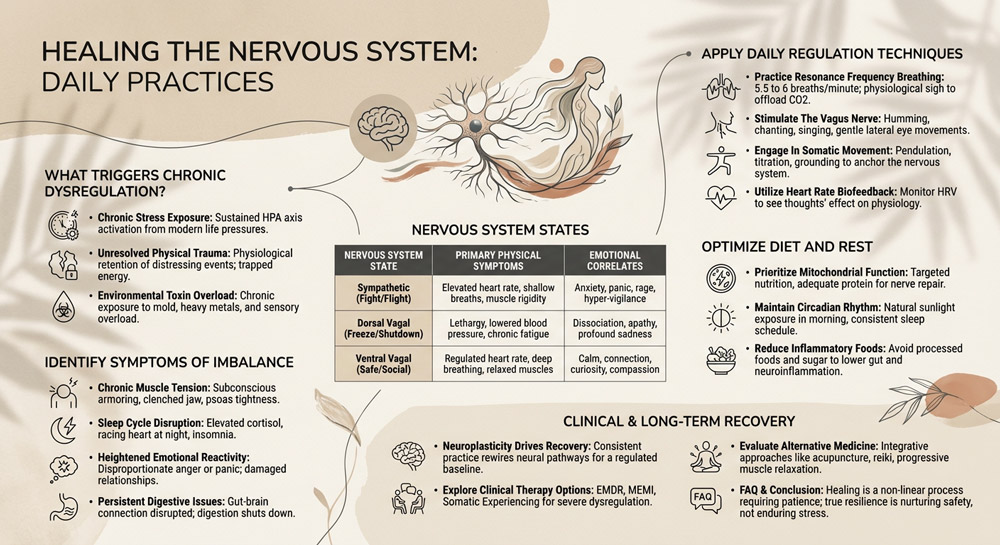
Healing the nervous system is the biological and psychological process of restoring the autonomic pathways so they can fluidly shift between states of arousal and calm, rather than remaining trapped in a chronic state of threat. When someone successfully regulates these pathways, they fundamentally alter how their brain structure and body respond to daily stress, allowing for deeper resilience and emotional clarity.
Society tends to treat the human body like a machine requiring a software update. A corporate executive sitting in a high-rise office might assume her chronic exhaustion is merely a lack of discipline. She downloads meditation apps. She tracks her sleep. She attempts to optimize her output while quietly eroding the conditions that actually make her feel safe. The prevailing culture demands constant growth and upgrading, treating physiological limits as hurdles rather than biological boundaries. True nervous system recovery requires stepping away from this relentless optimization. It demands looking at the physical body not as something to be conquered, but as an environment to nurture.
What Triggers Chronic Dysregulation?
Chronic Stress Exposure
The human body was designed to handle acute stress. A sudden threat appears, the sympathetic system floods the bloodstream with cortisol and adrenaline, and the individual acts. Once the threat passes, the parasympathetic system initiates a relaxation response, bringing the body back to baseline. Modern life rarely offers that resolution. Deadlines, financial pressures, and interpersonal conflicts create a sustained activation of the HPA axis. The brain interprets an unanswered email with the same biological alarm as a physical predator. Over time, this constant drip of stress hormones creates a sympathetic dominant baseline, leaving the individual perpetually hypervigilant.
Unresolved Physical Trauma
Trauma is not just a psychological event; it is a physiological retention of a distressing event. When a person cannot fight or flee during extreme stress, the nervous system functions by defaulting to a freeze state, mediated by the dorsal vagus nerve. The energy mobilized for survival gets trapped in the body. Years later, a minor stressor might trigger a massive physiological response because the autonomic nervous system still perceives the original threat as present. Unresolved traumatic memory disrupts the natural rhythm of the nervous system state, requiring evidence-based interventions to safely discharge that stored energy.
Environmental Toxin Overload
Dysregulation is not entirely emotional. The physical environment plays a massive role in autonomic health. Chronic exposure to mold, heavy metals, or even relentless sensory overload from artificial lighting and digital notifications forces the brain to remain on high alert. The nervous system works constantly to filter out these unnatural inputs. When the biological load becomes too heavy, the body’s control center struggles to maintain equilibrium, leading to chronic tension and systemic inflammation.
Identify Symptoms Of Imbalance
Recognizing a dysregulated nervous system means observing the subtle and not-so-subtle physical responses the body exhibits daily.
Chronic Muscle Tension
This is rarely just about poor posture at a desk. When the nervous system kicks into a protective response, it instinctively arms the body against attack. Shoulders hike up toward the ears, the jaw clenches, and the psoas muscle tightens to prepare for a flight response. This physical armoring requires immense metabolic energy. Living with this level of muscle tension signals that the body does not feel safe in its current environment.
Sleep Cycle Disruption
Restful sleep is biologically impossible when the brain perceives an active threat. Individuals with dysregulation often experience a racing heart at 3 AM or find themselves unable to drift off despite profound exhaustion. Cortisol levels, which should naturally dip in the evening, remain elevated. This disrupts the circadian rhythm entirely, preventing the deep, restorative sleep necessary for brain health and cellular repair.
Heightened Emotional Reactivity
A healthy nervous system allows for a gap between a stimulus and a response. Dysregulation erases that gap. Minor inconveniences provoke disproportionate anger or panic. The sympathetic mode overrides higher-order cognitive functions in the prefrontal cortex. Logic becomes inaccessible. This reactivity often damages relationships, as the individual responds to benign interactions as if they were personal attacks.
Persistent Digestive Issues
The gut and the brain are intimately connected via the vagus nerve. When the body enters survival mode, digestion is deemed non-essential and effectively shut down. Blood is diverted away from the stomach to the limbs. This chronic shift away from the parasympathetic mode leads to systemic digestive issues, from irritable bowel syndrome to severe acid reflux.
|
Nervous System State |
Primary Physical Symptoms |
Emotional Correlates |
|---|---|---|
|
Sympathetic (Fight/Flight) |
Elevated heart rate, shallow breaths, pupil constriction, muscle rigidity |
Anxiety, panic, rage, hyper-vigilance |
|
Dorsal Vagal (Freeze/Shutdown) |
Lethargy, lowered blood pressure, bronchoconstriction, chronic fatigue |
Dissociation, apathy, profound sadness |
|
Ventral Vagal (Safe/Social) |
Regulated heart rate, deep breathing, relaxed facial muscles |
Calm, connection, curiosity, compassion |
Apply Daily Regulation Techniques
Healing requires moving beyond the intellect and engaging the body directly. It is impossible to simply think one’s way out of a physiological threat response.
Practice Resonance Frequency Breathing
Most people are told to take deep breaths when panicked. This often backfires, causing hyperventilation and more anxiety. True nervous system regulation relies on resonance frequency breathing, typically around 5.5 to 6 breaths per minute. This specific cadence maximizes heart rate variability and stimulates a parasympathetic response. Another highly effective mechanism is the physiological sigh—two sharp inhales through the nose followed by a long, slow exhale through the mouth. This mechanically offloads carbon dioxide and immediately signals the brain to calm down. For anyone dealing with high pressure, establishing a consistent nervous system regulation routine requires practicing these breathing mechanics daily, not just during moments of panic.
Stimulate The Vagus Nerve
The vagus nerve is the information highway between the body and the brain, and toning it is crucial for a relaxation response. While intense cold exposure has gained popularity, gentle stimulation is often more effective for traumatized systems. Humming, chanting, or singing activates the vocal cords, which sit right next to the vagus nerve. Gentle lateral eye movements can also send safety signals to the brain stem. These practices incrementally increase vagal tone, allowing the system to recover from daily stress more efficiently.
Engage In Somatic Movement
Traditional workouts often mimic the stress response, pumping more adrenaline into an already exhausted system. Somatic experiencing focuses on internal awareness rather than external performance.
-
Pendulation: Shifting attention between a place of tension in the body and a place of neutrality.
-
Titration: Approaching difficult physical sensations in very small, manageable doses to prevent sensory overload.
-
Grounding: Feeling the physical weight of the body against the floor to reorient the brain to the present moment.
For those prone to dissociation, using specific techniques to anchor your nervous system with mindful movement provides a safe pathway back into the physical body.
Utilize Heart Rate Biofeedback
Clinicians emphasize evidence-based biofeedback because it provides objective data on autonomic function. By monitoring heart rate variability (HRV)—the tiny fluctuations in time between heartbeats—individuals can see real-time how their thoughts and breathing affect their physiology. Higher HRV indicates a resilient, adaptable nervous system. Using biofeedback devices helps bridge the gap between abstract psychological concepts and tangible biological metrics.
Optimize Diet And Rest
Psychology is deeply entwined with biology. Trying to regulate an anxious mind in an inflamed, under-nourished body is an uphill battle.
Prioritize Mitochondrial Function
Mitochondria are the energy producers of the cells, heavily concentrated in the brain and nervous systems. Chronic stress damages these structures. Emerging research on neuroplasticity suggests that mitigating physiological stress and enhancing mitochondrial performance directly supports structural brain healing. Supporting these pathways often involves targeted nutrition, adequate protein intake, and ensuring the body has the fundamental building blocks to repair damaged nerves.
Maintain Circadian Rhythm
Light exposure dictates the production of dopamine, serotonin, and melatonin. Viewing natural sunlight within the first hour of waking halts melatonin production and sets a healthy cortisol curve for the day. A consistent sleep schedule is non-negotiable. Without it, the brain cannot clear out metabolic waste, leaving the individual prone to brain fog and emotional volatility the following day.
Reduce Inflammatory Foods
Systemic inflammation keeps the nervous system on high alert. Highly processed foods, refined sugars, and excessive alcohol intake irritate the gut lining. Because the gut produces the vast majority of the body’s neurotransmitters, gut inflammation directly translates to neuroinflammation. Reducing these triggers is a critical step in lowering the body’s overall threat burden.
How Does Neuroplasticity Drive Recovery?
The neuroscience community views nervous system recovery through the lens of neuroplasticity—the brain’s remarkable ability to structurally and functionally adapt. Healing is not a vague concept; it is the physical rewiring of neural pathways. Whenever an individual successfully practices a regulation technique instead of defaulting to a historical stress response, they strengthen new, healthier synaptic connections. Groundbreaking research exploring neuroplasticity and nervous system recovery confirms that targeted behaviors can actually promote axonal repair. The brain is not static. With consistent intervention, it alters its physical structure to support a calmer, more regulated baseline.
Explore Clinical Therapy Options
When dysregulation stems from severe historical stress, self-directed practices might not be enough. Professional interventions provide the necessary containment and safety. Therapists often utilize Heart Rate Variability biofeedback alongside trauma-informed cognitive therapies to help clients slowly downregulate physiological arousal.
Therapies like Eye Movement Desensitization and Reprocessing (EMDR) or Multichannel Eye Movement Integration (MEMI) use bilateral stimulation to help the brain process and integrate traumatic memories without overwhelming the client. Another highly effective modality is Somatic Experiencing (SE), developed by Dr. Peter Levine. SE focuses entirely on the physical manifestations of trauma, helping individuals slowly discharge bound survival energy. Literature reviews on somatic experiencing and body-oriented trauma therapy demonstrate its effectiveness in reducing symptoms of PTSD and chronic tension. For individuals trapped in high-performance careers, mapping out therapeutic pathways to healing is vital to preventing complete physical collapse. Furthermore, dedicated programs like those offered by Alaska Behavioral Health showcase the necessity of structured, intensive support for severe dysregulation.
Evaluate Alternative Medicine Interventions
The complementary medicine perspective offers a different, often debated, lens on regulation. Practitioners of integrative medicine argue that therapies like acupuncture, reiki, and targeted nutritional supplements can significantly reduce sympathetic tone.
While the medical community sometimes questions unproven social media trends, systematic reviews show that certain complementary practices do yield measurable reductions in stress markers. Acupuncture, for instance, has been shown to stimulate the vagus nerve and release endorphins, facilitating a deep state of calm. Progressive muscle relaxation, often incorporated into holistic therapies, mechanically forces the muscles to release chronic tension. The evidence surrounding some energetic therapies remains mixed, but many individuals report subjective improvements in their overall sense of safety and empowerment when incorporating these modalities into a broader, evidence-based treatment plan.
FAQ
How long does it take to heal a dysregulated nervous system? Healing is not linear and there is no fixed timeline. Because the process relies on neuroplasticity, it requires consistent, daily repetition over months or years. It is about gradually increasing capacity, not achieving an instant reset.
Can anxiety exist in a regulated nervous system? Yes. A regulated system is not a numb system. It is normal to feel anxiety in response to a genuine stressor. The difference is that a regulated system will naturally return to a calm state once the stressor is removed, whereas a dysregulated system remains stuck in anxiety.
Is deep breathing always good for the nervous system? No. For individuals with severe trauma, focusing on the breath can sometimes trigger panic or hypervigilance. In these cases, it is often safer to start with grounding techniques that focus on the external environment rather than internal sensations.
Conclusion
The modern obsession with output demands a price the human body was never meant to pay. People push through exhaustion, masking biological distress with caffeine and sheer willpower, believing that compliance to the grind is a marker of character. It is not. True resilience is not the ability to endure endless abuse; it is the capacity to recognize one’s own limits and actively nurture a state of safety. Taking the time to slowly, intentionally train the body to calm threat responses is an act of profound self-respect. It requires stepping away from the noise, listening to the subtle cues of the body, and trusting that clarity and authentic connection naturally emerge when the nervous system finally feels safe enough to rest.