
Last updated on July 17, 2026
Introduction
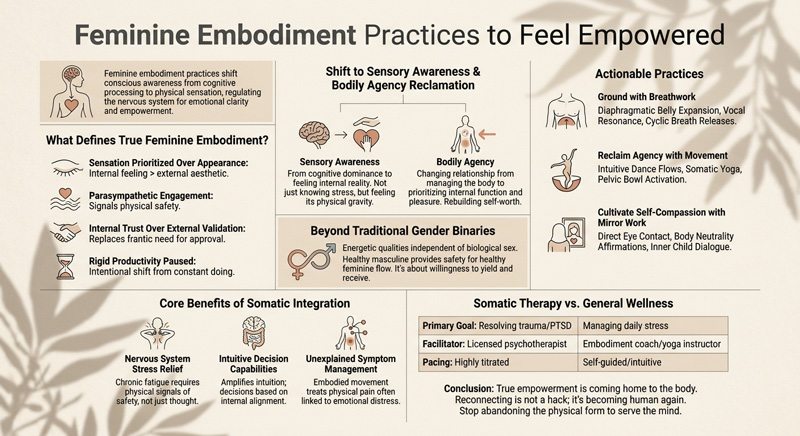
Feminine embodiment practices are body-based interventions designed to shift an individual’s conscious awareness away from cognitive processing and directly into physical sensation. They encompass techniques like conscious breathwork, intuitive movement, and vocal resonance to regulate the nervous system and foster emotional clarity.
Modern corporate environments optimize human beings for maximum output. They reward individuals for severing the connection between their minds and their bodies. People become walking heads. They navigate spreadsheets and boardroom politics while completely ignoring the physical tension pooling in their shoulders. Reconnecting with the physical form is not a luxury. It is a necessary intervention for basic survival. A highly optimized, disembodied workforce might be efficient, but it is deeply fragile. Embodiment is the practice of coming back home.
What Defines True Feminine Embodiment?
The broader culture fundamentally misunderstands feminine energy. Society often paints it as passive, delicate, or purely aesthetic. True feminine embodiment work has absolutely nothing to do with performing for an audience.
A genuine embodiment practice involves a few core principles:
-
Sensation is prioritized entirely over appearance or aesthetic execution.
-
The parasympathetic nervous system is actively engaged to signal physical safety.
-
Internal trust slowly replaces the frantic need for external validation.
-
The rigid expectation of constant productivity is intentionally paused.
Shift to Sensory Awareness
The intellect wants to solve problems. The mind categorizes, labels, and plans for the future. The School of Embodied Arts frequently addresses how feminine embodiment coaching forces a deliberate shift away from this cognitive dominance. A sensitive woman must learn to feel her internal reality rather than just intellectually analyzing her problems. It is the vast difference between logically knowing a person is stressed and actually feeling the specific gravity of that stress sitting heavy in the chest cavity.
Bodily Agency Reclamation
People often treat their own bodies like properties to be managed or upgraded. They feed the body green juice just to make it work harder. According to a recent test on negative embodiment, strict adherence to traditional patriarchal expressions of femininity usually increases self-objectification and dissatisfaction. Reclaiming agency means changing the relationship entirely. The focus pivots to internal function and pleasure. This shift is an essential tool for women rebuilding self-worth and finding confidence after years of living strictly for the approval of others.
Beyond Traditional Gender Binaries
Energetic qualities exist entirely independently of biological sex or social gender. The masculine energy builds containers, structures, and logical frameworks. The feminine energy flows through those containers with creativity, emotion, and unpredictable life force. A healthy masculine provides the psychological safety necessary for a healthy feminine to exist without fear. Anyone can cultivate these feminine skills. It is not about biology. It is about a willingness to yield and receive.
Core Benefits of Somatic Integration
The physical advantages of these techniques extend far beyond simple relaxation. Talk therapy is valuable, but it frequently hits a wall when trauma remains locked in the physical form.
Nervous System Stress Relief
Stress does not simply vanish when a person clocks out of work. It gets trapped in the fascia and muscle tissues. An insightful overview on somatic care for women outlines exactly why chronic fatigue and burnout require physical interventions. The nervous system needs explicit, physical signals that the environment is finally safe. You cannot just think your way out of a nervous system response.
Intuitive Decision Capabilities
The gut processes millions of data points before the conscious brain even registers a single thought. Cultivating a deep connection to the physical self amplifies intuition. It gives a person the skill to make complex decisions based on internal alignment rather than relying on external logic alone.
Unexplained Symptom Management
The body will aggressively force a person to rest if they refuse to do it voluntarily. Researchers studying medically unexplained symptoms consistently find that embodied movement and breathwork are highly effective treatments. Physical pain is very often just emotional distress that has nowhere else to go.
Ground Your Body Through Conscious Breathwork
Breath is the remote control for the human nervous system. It is the most accessible experiential practice available.
Diaphragmatic Belly Expansion
A stressed professional usually breathes entirely into the upper chest. This shallow breathing locks the body in a perpetual state of mild panic. Expanding the belly on the inhale pulls the diaphragm down. It physically massages the vagus nerve and forces the body to stand down from high alert. The simplest ideas are often the most potent.
Vocal Resonance Exercises
Sound waves physically vibrate the internal organs. Humming, chanting, or simply letting out a deep sigh directly stimulates the vocal cords. This low-frequency vibration acts as a hard reset button for a deeply dysregulated nervous system. It allows trapped energy to exit the body through the throat.
Cyclic Breath Releases
Intentional breathing patterns interrupt cyclical anxiety loops. Following a guided feminine energy breathwork routine emphasizes softening the abdomen completely during the exhalation phase. The simple act of releasing abdominal tension signals profound safety to the primitive brain.
Reclaim Agency With Sensorial Movement
Movement practices untangle the rigid knots left by modern, sedentary living.
Intuitive Dance Flows
There is no choreography to memorize here. The goal is moving purely for the sake of feeling the motion. A comprehensive systematic review on dance therapy demonstrates how this unstructured movement helps trauma survivors heal by completely bypassing the logical brain. The body leads the exploration. The mind follows.
Somatic Yoga Postures
Western culture turned yoga into a competitive sport focused on flexibility. True embodied yoga abandons the pursuit of the perfect posture. It focuses entirely on the internal experience of the stretch. The practice becomes a quiet inquiry into where emotional tension is hiding.
Pelvic Bowl Activation
The hips act like a junk drawer for unexpressed emotions. People hold onto anger, fear, and deep shame directly in the pelvic region. Studies clearly indicate that belly dance acts as an embodying activity capable of drastically improving body appreciation by activating and mobilizing this exact area. Movement here is a potent way to release stagnant energy.
Cultivate Self-Compassion Using Mirror Work
Facing the mirror is often the most confrontational embodiment exercise a person can undertake.
Direct Eye Contact Rituals
Most individuals look in the mirror only to check for flaws. They scan for blemishes, weight gain, or signs of aging. Maintaining direct eye contact with one’s own reflection without looking away builds immense self-intimacy. It is incredibly uncomfortable at first. Sitting through that discomfort builds profound resilience.
Body Neutrality Affirmations
Toxic positivity demands that a person loudly love every single flaw immediately. That is usually a lie. Working with body confidence coaches for women often begins with simple neutrality. The goal is just accepting that the physical form exists, breathes, and deserves basic respect without needing to be exceptionally beautiful.
Inner Child Dialogue
Shame makes people hide from themselves. Healing requires bringing those hidden parts into the light. Speaking words of comfort and safety to the reflection is a core aspect of healing shame in women through compassion and inner healing. It provides the exact co-regulation that was likely missing during childhood.
How Somatic Awareness Counters Societal Expectations
Society highly values compliance. A person who ignores their own physical needs to meet a corporate deadline is celebrated as a dedicated worker. Somatic awareness fundamentally disrupts this entire system. When a person tunes into their physical limits, they naturally begin setting healthy boundaries. They stop saying yes when their body is screaming no.
Scholars deeply focused on reclaiming the female body point out that true bodily autonomy is an act of quiet rebellion against a culture of relentless production. It challenges the older stories that more output is the only answer to happiness.
Distinguish Somatic Therapy From General Wellness
Not all body-based practices serve the same purpose. It is critical to understand the distinction between clinical therapeutic intervention and daily wellness maintenance.
|
Feature |
Somatic Therapy |
General Embodiment Wellness |
|---|---|---|
|
Primary Goal |
Resolving deep-seated trauma and PTSD |
Managing daily stress and enhancing connection |
|
Facilitator |
Licensed clinical psychotherapist |
Embodiment coach or yoga instructor |
|
Pacing |
Highly titrated to avoid overwhelming the nervous system |
Self-guided or fluidly paced based on intuition |
|
Scientific Backing |
Proven methods for treating trauma medically |
Supported by general well-being and mindfulness studies |
|
Focus |
Repairing the “Inner O.S.” and processing memories |
Expanding capacity for pleasure, rest, and creativity |
FAQ
What makes a practice specifically feminine? It focuses entirely on receptivity, flow, and internal feeling rather than structured output, heavy exertion, or physical gains, which are traditionally masculine traits.
How much time does a perfect daily practice require? Ten minutes of intentional, focused sensory awareness is far more effective than an hour of distracted, disconnected stretching. Consistency matters more than duration.
Do these feminine practices exclude men? Not at all. Everyone possesses both masculine and feminine energy. Many men desperately need feminine embodiment work to recover from the rigid, isolating demands of hyper-masculine corporate cultures.
Is embodiment work a spiritual practice? It certainly can be, but it does not have to be. For many, it is a purely psychological and physiological tool used to regulate the nervous system and build emotional intelligence.
Conclusion
Scaling up is the modern obsession. Scale the business, scale the income, scale the lifestyle. But unchallenged scaling at all costs destroys the very connection people actually crave. People are hungry for real, grounded existence, not just more accomplishments on a resume.
Reconnecting with the physical body is not another productivity hack designed to help a person work harder. It is the slow, deliberate work of becoming a human being again instead of just a human doing. Compliance is not character, and ignoring physical limits is not strength. True empowerment never comes from abandoning the body to serve the mind. It comes from finally coming home to it.