
Introduction
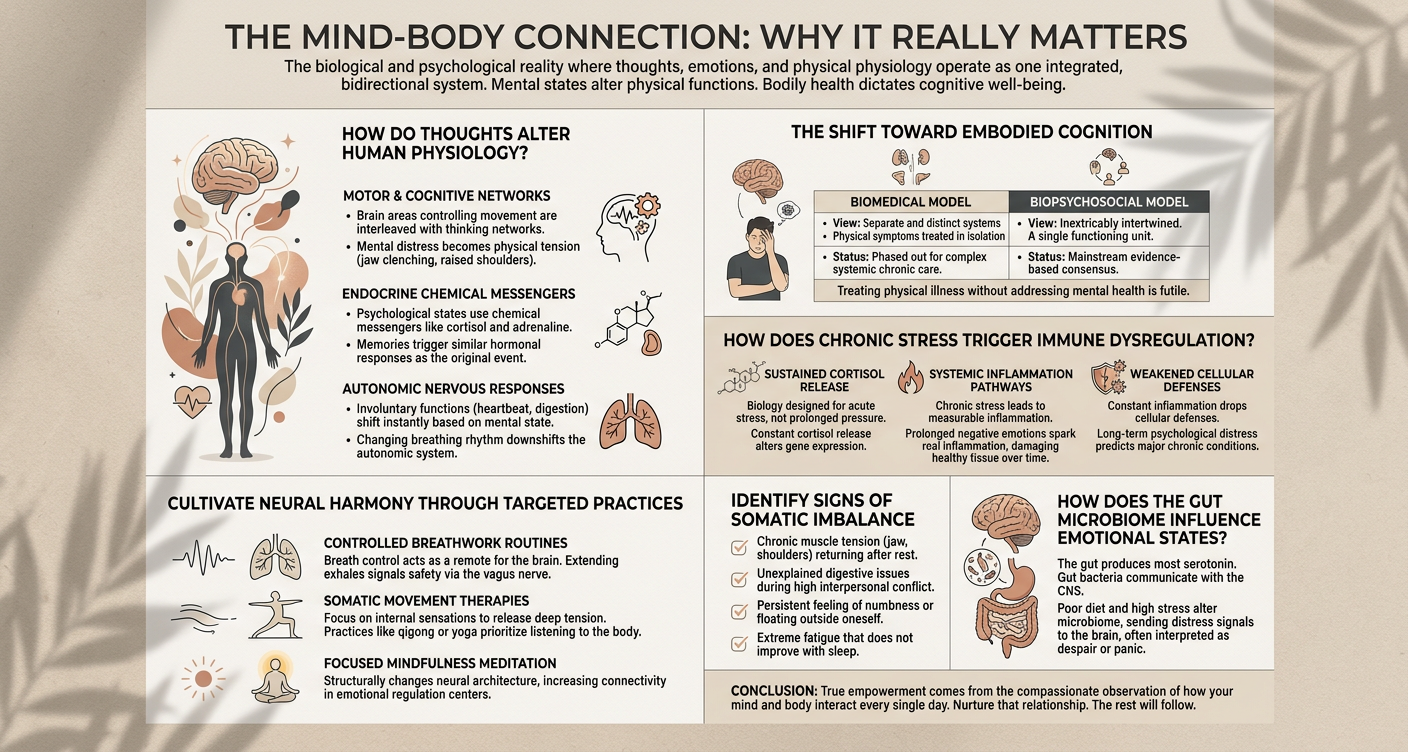
The mind-body connection is the biological and psychological reality that our thoughts, emotions, and physical physiology operate as one integrated, bidirectional system. Mental states alter physical functions. Bodily health dictates cognitive well-being. This is the clinical baseline.
Every week in my practice here in Singapore, I sit across from corporate leaders who treat their bodies like drivers for their brains. They optimize for output. They ignore the dashboard warning lights entirely. I see clients whose anxiety panic manifests as physical back tension or significant digestive discomfort. We live in a culture that rewards this detachment. You get promoted for ignoring your bodily functions to hit a deadline. We pretend we can think our way out of a physiological crisis. We cannot.
The cost of this mental gymnastics is steep. A struggling nervous system eventually stops asking for attention. It starts demanding it.
How Do Thoughts Alter Human Physiology?
People imagine a thought is just a cloud floating in the skull. A thought is a physical event. When you worry about an impending board meeting or a complex relationship, your physical biology goes to work.
Motor And Cognitive Networks
The physical hardware is wired together. Breakthrough neuroimaging shows that brain areas controlling movement are structurally interleaved with networks responsible for thinking and planning. This means mental distress inevitably becomes physical tension. We can observe how emotional states dictate physical changes through these automated neural outputs. Your jaw clenches. Your shoulders rise. The body braces for an impact that exists entirely in your mind.
Endocrine Chemical Messengers
Psychological states communicate directly with the rest of your systems using chemical messengers. Think of stress hormones like cortisol and adrenaline. When a client recounts a painful childhood memory, their physiology relives it in real time. We explore how the brain and body connect to understand these chemical cascades. The memory triggers the similar hormonal response as the original event. Your body does not know the difference between a past threat and a present memory.
Autonomic Nervous Responses
Then we have the involuntary bodily functions. Heartbeat. Blood pressure. Digestion. Your autonomic responses shift instantly based on your mental state. The ongoing integration of traditional mind-body practices with modern neurology illustrates how something as simple as changing your breathing rhythm forces the autonomic system to downshift. You cannot separate the feeling of panic from the physical reality of a racing heart.
The Shift Toward Embodied Cognition
For generations, western medicine operated on Cartesian dualism. The mind was the software. The body was the hardware. This framework is outdated and frankly dangerous. The consensus among neuroscientists and medical anthropologists has firmly moved toward an embodied cognition paradigm.
|
Paradigm |
View of Mind and Body |
Core Mechanisms Explored |
Status in Modern Medicine |
|---|---|---|---|
|
Biomedical Model |
Separate and distinct systems. Physical symptoms treated in isolation. |
Pathogens, localized trauma, and structural anatomy. |
Phased out for complex systemic chronic care. |
|
Biopsychosocial Model |
Inextricably intertwined. A single functioning unit. |
Neuro-endocrine signaling, immune pathways, and systemic feedback loops. |
Mainstream evidence-based consensus. |
We are finally realizing that treating physical illness without addressing mental health is like trying to bail water out of a sinking boat without plugging the hole.
How Does Chronic Stress Trigger Immune Dysregulation?
Burnout is not just a psychological state of feeling tired. It is a profound immune event. We are seeing a culture obsessed with growth, upgrading, scaling, and accumulating. That high-pressure environment creates chronic distress.
Sustained Cortisol Release
Our biology was designed for acute stress. A brief respond to a short-term challenge. It was not designed for a thirty-year marathon of performance reviews and inflation anxieties. The clinical data revealing how unmanaged psychological stress compromises systemic functions across our endocrine and gastrointestinal structures is staggering. Constant pressure keeps cortisol flowing. That sustained release alters gene expression entirely.
Systemic Inflammation Pathways
Chronic stress equals chronic inflammation. Research in psychoneuroimmunology confirms that prolonged negative emotions spark real, measurable inflammation. Your immune system stays in high alert. Over time, this hyper-vigilance damages healthy tissue. We see clear patterns in population surveys tracking how macroeconomic and global crises register as massive collective physical burdens. Mental illnesses often mirror these inflammatory pathways.
Weakened Cellular Defenses
When the system is constantly inflamed, your cellular defenses drop. This is why people get sick the exact weekend after a massive project finishes. The adrenaline wears off. The immune system crashes. Long-term psychological distress becomes a baseline predictor for major chronic conditions.
Psychological Predictors For Cardiovascular Health
Money and status carry immense emotional weight here in Singapore. The relentless drive to secure the right address or the next promotion exacts a hidden toll on the heart. Money easily becomes the language we use to talk about who we are allowed to be. The American Heart Association formally recognizes a definitive mind-heart-body connection. Your baseline psychological well-being is a massive predictor for cardiovascular prognosis.
Acute emotional shocks can cause sudden cardiac issues. The quiet, daily grind of unmanaged anxiety is what slowly stiffens arteries over decades. Heart disease is rarely just a mechanical failure. It is often a record of how we have lived, worried, and coped.
Cultivate Neural Harmony Through Targeted Practices
Awareness is the first step. Actionable regulation is the next. We need to foster resilience and curiosity rather than demanding immediate compliance from our bodies. A child who stops bullying because they are afraid of the cane has not learned that hurting someone is wrong. In much the same way, forcing your body to stay awake through sheer willpower and caffeine does not teach your nervous system resilience. It only teaches your body that its signals of exhaustion will be repeatedly ignored.
Controlled Breathwork Routines
Breath control is the remote control for your brain. By extending your exhales, you send a direct signal of safety via the vagus nerve. I often remind clients investigating their psychological health that you cannot think your way into relaxation. You have to breathe your way there.
Somatic Movement Therapies
Trauma and chronic tension live in the fascia and muscle tissues. Somatic exercises focus on internal physical sensations rather than external appearance. Using grounded tactile movement techniques, you can release tension held deeply within the body. Practices like qigong or gentle yoga therapy prioritize this internal dialogue. You stop telling the body what to do and start listening to what it needs.
Focused Mindfulness Meditation
Mindfulness based stress reduction is not just a trendy buzzword. It structurally changes your neural architecture. We have hard data showing how regular meditation increases structural connectivity in the emotional regulation centers of the brain. You might also explore specific cognitive and physical techniques used in clinical settings to trigger physiological relaxation. Integrating these routines can be as straightforward as choosing to practice mindful movement during your morning coffee routine.
Identify Signs Of Somatic Imbalance
Most of us are completely detached from our neck downwards. We only notice our bodies when they scream in pain. Cultivating a holistic approach requires paying attention to the whispers before they become shouts.
Look for these common indicators that your mind and body are out of sync:
-
Chronic muscle tension in the jaw, shoulders, or pelvic floor that returns immediately after resting.
-
Unexplained digestive issues or nausea that flare up exclusively during periods of high interpersonal conflict.
-
A persistent feeling of numbness or floating outside yourself during high-stress moments.
-
Extreme fatigue that does not improve with sleep.
Learning to read these signals is part of the work. You can explore this further by understanding the mind-body connection and how somatic tracking actually functions in daily life. Alternatively, you might want to look into how stored trauma dictates your physical timeline.
How Does The Gut Microbiome Influence Emotional States?
The gut-brain axis is a fascinating frontier in medical science. Your gut produces the vast majority of your serotonin. The bacteria in your digestive tract constantly communicate with your central nervous system. When you eat poorly or live in a state of high stress, your microbiome alters. That alteration sends distress signals back to the brain.
We often treat depression and anxiety as purely psychiatric issues. Oddly enough, they are frequently rooted in gastrointestinal inflammation. The brain receives the inflammatory signal from the gut and interprets it as despair or panic. Healing the mind often requires nurturing the physical ecosystem of the stomach.
FAQ
Can mental health treatment actually cure physical ailments?
It depends on the ailment. Therapy is not a substitute for medication when dealing with acute infections or structural damage. Addressing psychological health may reduce inflammation, improves recovery times, and lowers the intensity of chronic pain. Your immune system frees up resources to heal the physical body once it stops fighting phantom psychological threats.
Why do I feel physically exhausted after a therapy session?
Processing heavy emotions requires massive amounts of metabolic energy. Your brain consumes extra glucose when dealing with complex trauma or deep psychological shifts. Physical exhaustion is a normal, healthy indicator that your nervous system is actively reorganizing itself. Let it rest.
Is the mind-body connection recognized by traditional doctors?
Yes. The biomedical model has evolved significantly. Most mainstream healthcare professionals now recognize that chronic conditions, heart disease, and immune disorders are deeply entangled with behavioral health and lifestyle factors. You will find that leading hospitals prescribe meditation right alongside medication.
Conclusion
We are not machines requiring an occasional tune-up. We are complex, breathing ecosystems. Demanding unquestioned productivity from yourself while ignoring your physiological reality is can lead to difficulties over time. True empowerment comes from clarity. It comes from the compassionate observation of how your mind and body interact every single day. Nurture that relationship. The rest will follow.