
Most individuals sit on expensive velvet cushions, cross their legs, and wage an invisible war against their own thoughts. The corporate wellness industry routinely packages standard meditation as a quick productivity hack. Sit down. Force the brain into silence. Squeeze out ten minutes of calm before the next board meeting. For anyone carrying decades of unaddressed stress, this forced mental emptiness feels entirely unnatural. A brain trapped in a chronic state of hypervigilance cannot simply logic its way into relaxation. The thinking mind is a terrible master when the nervous system is screaming.
Somatic meditation sidesteps this intellectual trap completely. The practice grounds itself entirely in the physical form. Practitioners stop trying to think their way into peace and instead drop their attention heavily into the raw physical sensations of the present moment. This requires a radical shift in perspective. You stop treating the physical body as an inconvenient taxi for the brain. The body becomes the primary vehicle for awareness.
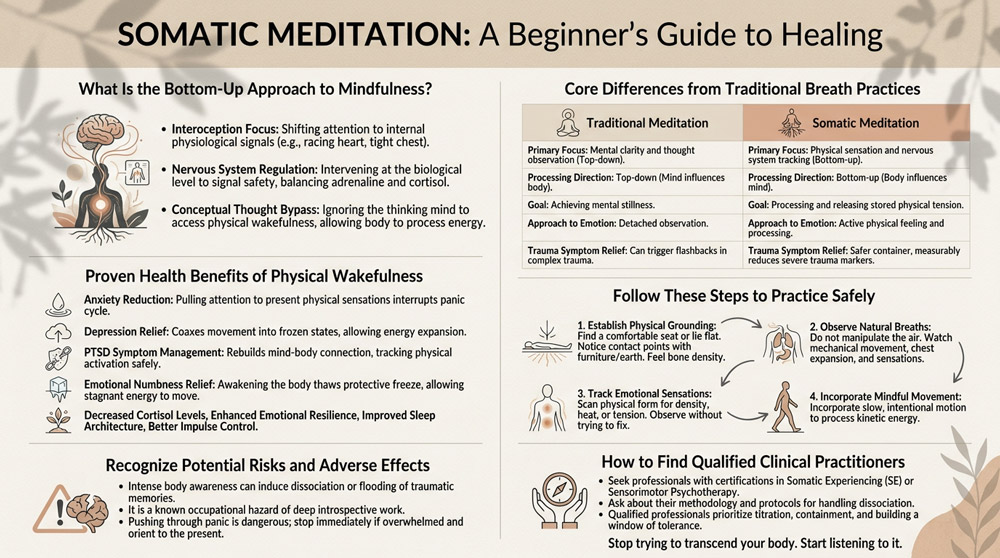
What Is the Bottom-Up Approach to Mindfulness?
Cognitive behavioral models historically dominated the mental health landscape. These models suggest that changing your thoughts will eventually change your feelings. That top-down strategy often fails miserably for deep-seated emotional wounds. A bottom-up approach works in the exact opposite direction.
Interoception Focus
Interoception is the nervous system’s ability to perceive internal signals. A racing heart. A tight chest. A fluttering stomach. Standard mindfulness might ask a person to notice a thought and let it float away like a cloud. Somatic practices demand acute attention to the physical weight of that thought inside the chest cavity. Shifting attention toward internal physiological signals actually changes how the brain processes emotional data. The focus rests purely on the bodily sensations happening right now.
Nervous System Regulation
Unresolved stress forces the autonomic nervous system into a perpetual loop of fight, flight, or freeze. The individual lives in a state of constant, low-grade panic. Somatic healing requires intervening at the biological level. Deep engagement with physical sensations provides the brain with updated evidence that the immediate environment is safe. The body can balance the score when given the space to process lingering adrenaline and cortisol. This organic nervous system regulation creates genuine physiological safety rather than just a temporary distraction.
Conceptual Thought Bypass
Overthinking rarely cures overthinking. Attempting to analyze a trauma response usually just triggers more anxiety. Somatic mindfulness intentionally short-circuits this endless loop. The practitioner bypasses the brain thinking mind entirely. This process ignores the ego consciousness in favor of accessing wakefulness inherent in the physical body. You do not need an elaborate narrative to explain why your shoulders are tight. You simply need to feel the tension deeply enough to let the basic soma process the blocked energy.
Core Differences from Traditional Breath Practices
Understanding the mechanical differences between these styles prevents immense frustration. Many people assume they are terrible at meditation simply because they are using the wrong tool for their specific nervous system.
|
Feature |
Traditional Meditation |
Somatic Meditation |
|---|---|---|
|
Primary Focus |
Mental clarity and thought observation |
Physical sensation and nervous system tracking |
|
Processing Direction |
Top-down (Mind influences body) |
Bottom-up (Body influences mind) |
|
Goal |
Achieving mental stillness |
Processing and releasing stored physical tension |
|
Approach to Emotion |
Detached observation |
Active physical feeling and processing |
Top-down Methods
Traditional methods rely heavily on cognitive control. The practitioner uses mental focus to maintain attention on a single anchor point. Usually, this anchor is the breath at the tip of the nose or a repeated mantra. When the mind wanders, the practitioner uses discipline to pull the attention back. This builds excellent cognitive discipline. It does very little for a body that feels fundamentally unsafe.
Bottom-Up Methods
Bottom-up techniques prioritize the internal landscape over mental discipline. The anchor is the physical sensation of the body making contact with the floor. It is the feeling of warmth in the belly or the sharp tightness in the jaw. This approach allows the practitioner to modulate the interoceptive network organically. There is no right or wrong feeling. The meditative experience becomes a completely subjective exploration of physical reality.
Trauma Symptom Relief
Standard seated meditation can actually be dangerous for individuals with complex trauma histories. Sitting in absolute silence with closed eyes often acts as an accelerant for flashbacks. Somatic therapy offers a much safer container. Clinical trials repeatedly demonstrate that this approach measurably reduces severe trauma markers. The physical grounding mechanisms keep the individual anchored in present-day reality while their system slowly metabolizes old fear.
Proven Health Benefits of Physical Wakefulness
People do not commit to grueling inner work just for amorphous inspiration. They want tangible relief from the crushing weight of modern existence. Reconnecting with the physical self yields measurable biological changes.
-
Decreased Cortisol Levels: Regular practice visibly lowers baseline stress hormones.
-
Enhanced Emotional Resilience: The capacity to sit with discomfort expands significantly.
-
Improved Sleep Architecture: The nervous system learns how to power down effectively before sleep.
-
Better Impulse Control: A regulated body reacts less defensively to external triggers.
Anxiety Reduction
Anxiety lives in the future. It is a biological anticipation of a threat that has not happened yet. The physical body, by definition, can only exist in the present moment. Pulling attention down into the feet or the hands forces the brain to process real-time data instead of hypothetical catastrophes. This type of somatic release interrupts the panic cycle. The brain stops hallucinating danger because the physical senses confirm immediate safety.
Depression Relief
Depressive states often manifest as a heavy, stagnant lethargy. The individual feels completely disconnected from their own vitality. Somatic meditation gently coaxes movement back into this frozen system. It is not about forcing positive thoughts or faking happiness. It is about locating tiny pockets of neutral or pleasant sensation within the body and allowing that energy to expand. This slow reawakening of the internal awareness provides a biological counterweight to the deadening effects of depression.
PTSD Symptom Management
Trauma shatters the connection between the mind and the body. The survivor learns to view their physical form as a source of pain or betrayal. Rebuilding this relationship requires immense patience and frameworks prioritizing trauma sensitivity. Practices like trauma-sensitive yoga allow the individual to safely re-inhabit their skin. They learn to track physical activation without immediately dissociating or panicking. This slow titration builds a profound sense of self-trust over time.
Emotional Numbness Relief
Many people mistake emotional numbness for healing. They feel nothing at all and assume they have conquered their demons. Numbness is just the nervous system’s final defense mechanism against overwhelming pain. Awakening the basic nature of the body thaws this protective freeze. As practitioners map their internal terrain, they inevitably bump into long-forgotten grief or anger. Feeling these emotions physically, without the story attached to them, allows the stagnant energy to finally move out of the tissues.
Follow These Steps to Practice Safely
Diving straight into deep trauma work without a life vest is a terrible idea. The goal is gentle exploration. You are mapping the territory, not conquering it.
Establish Physical Grounding
Find a comfortable seat or lie flat on your back. Keep your knees bent at a comfortable hip width distance if lying down. The physical posture must communicate absolute support to the nervous system. Notice the exact points where your skin makes contact with the furniture or the earth. Feel the density of your own bones. This energetic connection to the ground serves as your anchor. If the practice becomes overwhelming, you return your attention to this solid, immovable support.
Observe Natural Breaths
Do not manipulate the air. Do not try to breathe deeply or perfectly. Standard breathing exercises for anxiety often prescribe rigid counts and holds. Discard those rules entirely right now. Just watch the mechanical movement of the breath. Feel the ribs expanding laterally. Notice the slight pause at the top of the inhale. Pay attention to the breath sensations in the chest and the throat. Let the body breathe itself exactly as it wants to.
Track Emotional Sensations
Begin a slow scan of your physical form. You are hunting for areas of density, heat, or tension. When you locate a tight knot in your stomach or a heavy ache in your chest, do not try to fix it. Do not try to relax it. Just pull up a chair and sit next to it. Observe the texture of the sensation. Does it have a temperature? Does it shift when you place your attention on it? This requires radical compassion for your own discomfort.
Incorporate Mindful Movement
Sitting entirely still is not a prerequisite for mindfulness. Some nervous systems require motion to feel safe. Incorporating slow, intentional movement helps process kinetic energy. Walking slowly across a room while feeling the exact mechanics of the foot striking the floor is a profound practice. Gentle somatic grounding exercises teach the body that it can remain highly aware while in motion. The external movement facilitates internal stillness.
Recognize Potential Risks and Adverse Effects
The wellness industry aggressively markets meditation as a harmless panacea. That narrative is fundamentally dishonest. Any practice that radically alters your attention and pulls you deep into your own psyche carries inherent risk. Turning the spotlight inward can occasionally trigger massive psychological distress.
Intense body awareness sometimes induces dissociation. A practitioner might suddenly feel entirely disconnected from reality, as if they are watching their own life play out on a movie screen. Others experience a sudden flooding of traumatic memories. The body stores what the mind forgets. When you finally stop running and sit still, decades of suppressed terror or grief can breach the surface all at once. Research into the adverse effects of contemplative experiences confirms that these intense reactions are not rare anomalies. They are a known occupational hazard of deep introspective work. Pushing through this panic is dangerous. The moment the nervous system feels entirely overwhelmed, the practice must stop. The individual must immediately open their eyes, look around the room, and orient themselves to their present physical environment.
How to Find Qualified Clinical Practitioners
You cannot outsource your own healing, but you absolutely need an experienced guide when navigating the darker corners of your own nervous system. Reading about amazing somatic healing meditations online is vastly different from processing live trauma responses. You need someone trained in the mechanics of human physiology and psychological safety.
Look for professionals holding specific certifications in modalities like Somatic Experiencing (SE) or Sensorimotor Psychotherapy. These credentials indicate rigorous training in bottom-up processing. A standard talk therapist might be wonderful for unpacking childhood narratives, but they rarely know what to do when a client goes into physical shock on the couch. Ask potential practitioners direct questions about their methodology. Inquire about their specific protocols for handling dissociation. A qualified professional will never promise quick fixes or instant results. They will speak in terms of titration, containment, and building a wide window of tolerance. They understand that sustainable growth requires an incredibly slow, respectful pace.
FAQ
Can I do this if I have never meditated before? Absolutely. Many beginners actually find this approach much more intuitive than traditional methods. You already know how to feel a stomachache or a tense muscle. You are simply taking an existing biological function and applying deliberate attention to it.
How long does it take to see results? The nervous system does not operate on a corporate timeline. Some individuals feel a profound sense of relief after a single twenty-minute session. Others require months of consistent, gentle practice to chip away at decades of chronic tension.
Is this a replacement for traditional therapy? No. It is a powerful complementary tool. While this practice excels at moving physical energy, you often still need relational support to integrate those physical shifts into your daily life and relationships.
Conclusion
The pursuit of endless self optimization is a trap. We treat our bodies like broken machines that need constant upgrading, punishing them with rigid routines and aggressive biohacks. True healing requires a complete surrender of that combative mindset. You cannot bully your nervous system into feeling safe. You have to earn its trust through patient, non-judgmental observation.
Somatic meditation offers a pathway out of the relentless noise of the thinking mind. It asks you to stop analyzing your pain and simply allow it to exist within the vast container of your physical awareness. This work is rarely pretty. It is often messy, uncomfortable, and intensely vulnerable. But learning to sit with the reality of your own physical existence is the only way to genuinely inhabit your own life. Stop trying to transcend your body. Start listening to it.