
Introduction
Treating anxiety disorders in Singapore requires identifying an accessible, evidence-based modality like cognitive behavioral therapy (CBT) or somatic therapy and committing to a practitioner with whom one feels psychologically safe. Finding a mental health professional is often hindered by systemic bottlenecks, variable private clinic standards, and an overwhelming volume of choices. The path to relief demands bypassing prestige in favor of geographical convenience and clinical compatibility.
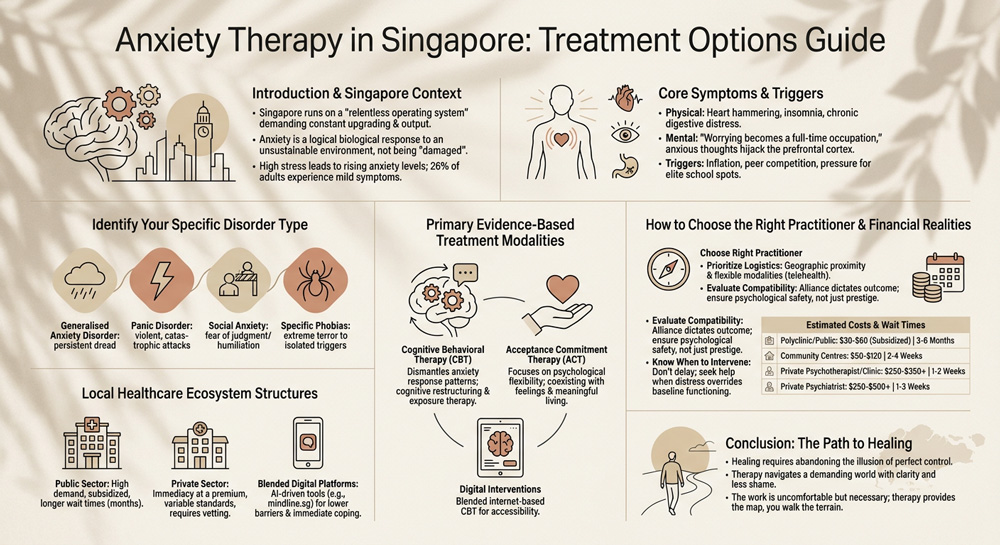
Singapore runs on a relentless operating system. The script usually demands constant upgrading from public flats to private condominiums, securing promotions, and optimizing every waking hour for output. Anxiety levels rise accordingly. People sit in consultation rooms, their bodies flooded with a stress hormone cascade, wondering why they feel that something is wrong with them when they have theoretically succeeded. They are not damaged. They are experiencing a perfectly logical biological response to an unsustainable environment.
What Are the Core Symptoms and Triggers?
Anxiety can have significant physical effects. It rarely announces itself as a neat list of mental health conditions. A person might just feel their heart hammering against their ribs during a mundane meeting. Overwhelming feelings blur into insomnia or chronic digestive distress. The body keeps the score of every unsaid fear. It tracks the inflation rates, the unspoken competition with peers, the pressure to secure a child a spot in an elite school.
Worrying becomes a full-time occupation. Anxious thoughts hijack the prefrontal cortex. Research from the National Council of Social Service indicates roughly 26 percent of adults experience mild depressive or anxiety symptoms, with another 19 percent reporting moderate symptoms. Yet many ignore these signals. They assume excessive worry is just the tax paid for ambition. Unmanaged anxiety eventually shifts from a temporary state to a chronic condition, eroding emotional intelligence and relational depth. Nervousness morphs into profound distress.
Identify Your Specific Disorder Type
Knowing the exact label helps narrow down the treatment plan. General anxiety disorder manifests as a persistent, generalized dread about everyday life. People with generalised anxiety disorder often struggle to isolate a single cause. It is just a hum of anxiousness in the background. Excessive anxiety bleeds into every decision.
Panic disorder is entirely different. It strikes violently. A panic attack feels like a catastrophic medical event, leading to intense fear of the next episode. Social anxiety disorder turns interpersonal interactions into minefields. The fear of judgment or humiliation dictates behavior, leading to severe avoidance. Specific phobias attach extreme terror to isolated triggers. Health anxiety traps individuals in endless loops of symptom checking. Proper disorder treatment requires mapping these specific anxiety responses rather than applying a generic talk therapy template. You need to know what you are fighting.
Primary Evidence-Based Treatment Modalities
Cognitive Behavioral Approach
Cognitive behavioral therapy dominates the clinical landscape for good reason. It dismantles the anxiety response pattern. A psychotherapist helps patients identify cognitive distortions and replace them with grounded realities. Cognitive restructuring is not about positive thinking. It is about accurate thinking. This therapeutic approach often incorporates exposure therapy for specific fears, safely introducing triggers until the nervous system stops sounding the alarm. Behavioural therapy essentially rewires the brain’s threat detection system.
Acceptance Commitment Therapy (ACT) Focus
Acceptance Commitment Therapy (ACT) asks a different question. Instead of trying to eliminate anxious feelings, this mindfulness-based approach teaches people to coexist with them. It focuses on psychological flexibility. Patients learn to clarify their values and take action despite the presence of fear. It moves the goalpost from symptom eradication to meaningful living. Scheduling dedicated worry time allows a person to compartmentalize their concern rather than letting it ruin the entire day.
Internet Delivered Care Formats
Digital interventions are gaining traction. Blended internet-based cognitive behavioural therapy adapts traditional frameworks for screens. It suits the highly scheduled corporate professional who cannot afford a two-hour block for travel and a counselling session. Remote consultation removes the friction of transit.
Local Healthcare Ecosystem Structures
Public Healthcare Capacity Limits
The public sector carries a high demand. Official figures show around 49,800 Singapore residents receive yearly mental health treatment across state institutions. This volume creates structural constraints. Wait times for a clinical psychologist or psychiatrist in restructured hospitals stretch for months. The capacity is limited. Systemic hurdles mean that immediate crisis intervention is prioritized over long-term exploratory psychotherapy.
Private Practice Variability
The private sector offers immediacy at a premium. Ecosystems like The Psychology Atelier or Alliance Counselling cater to different comfort levels. However, clinical supervision standards can vary between clinics. An intellect clinic might offer heavily structured corporate coaching programs, while an independent anxiety therapist provides nuanced, trauma-informed care. The lack of standardized regulation means patients must vet their mental health professionals carefully.
Blended Digital Therapy Platforms
Platforms like the national mindline.sg platform integrate AI-driven service locators and triage tools. These digital mental health resources lower the barrier to entry. They offer immediate coping strategies and relaxation techniques before a person ever steps foot in a clinic. Technology bridges the gap while patients wait for physical appointments.
How to Choose the Right Practitioner?
The name on the door matters far less than the logistics of getting there. Anxiety is an avoidance machine. When anxiety symptoms are already intense, any friction serves as an excuse to quit. You need a setup that makes showing up easy.
Prioritize Logistics and Convenience
-
Geographic Proximity: Choose a location that fits seamlessly into a weekly routine because it removes the hurdle of complex travel. If a clinic requires a 10-mile commute and a stressful parking experience, the patient will likely cancel their third session due to these huddles.
-
Administrative Ease: The booking process should be straightforward. Unclear scheduling or hostile receptionists add unnecessary layers to stressful situations.
-
Flexible Modalities: Practitioners offering both in-person and telehealth options provide the necessary flexibility when anxiety symptoms flare up and leaving the house feels impossible.
Evaluate Personal Clinical Compatibility
The alliance between a patient and their counsellor dictates the outcome. The professional must earn authority through trust. If a mental health professional feels judgmental or overly clinical, the psychological safety evaporates. A good psychotherapist listens to the subtext of your fears. They do not just dispense generic advice or hollow tips. They hold space.
Bypass Name Brand Prestige
Elite private practices do not hold a monopoly on effective anxiety counselling. High fees do not guarantee superior clinical psychologists. Focus on finding a practitioner who utilizes evidence-based methods and has a reputation for treating common anxiety disorders effectively. A relatively unknown therapist who specializes in social anxiety might offer far more value than a celebrity psychiatrist who barely looks up from their notepad.
Know When to Seek Professional Intervention
Delaying help is common. A study reported by Channel NewsAsia indicates nearly four out of five local adults with anxiety or depression do not seek formal help due to stigma or normalization. Many people wait until symptoms begin to significantly affect daily life. They assume everyone else is white-knuckling through their days too.
Do not wait for a complete breakdown. Intervene when distress overrides baseline functioning. When sleep disappears. When progressive muscle relaxation and basic mindfulness meditation no longer touch the edges of the panic. HealthHub’s clinical guidance outlines signs of persistent unmanaged anxiety that require a certified healthcare channel rather than just venting to friends. Time is rarely an ally when dealing with an escalating mental disorder. Start quickly. Helping yourself early prevents a crisis later.
How Much Does Mental Healthcare Cost?
Financial realities often dictate the therapeutic journey. Money carries emotional weight in Singapore. Spending it on intangible mental health services triggers its own anxieties.
|
Service Type |
Estimated Cost Per Session |
Typical Wait Time |
|---|---|---|
|
Polyclinic / Public Hospital |
$30 – $60 (subsidized) |
3 to 6 months |
|
Community Counselling Centres |
$50 – $120 |
2 to 4 weeks |
|
Private Psychotherapist / Clinic |
$250 – $350+ |
1 to 2 weeks |
|
Private Psychiatrist (Specialist) |
$250 – $500+ |
1 to 3 weeks |
Public subsidies ease the burden but demand patience. Community teams mapped by the Singapore Association for Mental Health bridge the gap, offering subsidized care without the extreme wait times of restructured hospitals. Private care offers speed and choice but requires significant financial allocation.
FAQ
What are the common anxiety disorders treated in Singapore? Generalised anxiety disorder, social anxiety, panic disorder, and specific phobias dominate the clinical landscape. Treatment plans vary based on the exact mental health condition.
Is medication necessary for anxiety treatment? Not always. While a psychiatrist might prescribe antidepressants or short-term benzodiazepines to quiet severe symptoms, many individuals manage their anxieties entirely through psychotherapy and behavioral modifications. Anxiety medication serves as a tool, not a mandatory cure.
How long does it take to see results from therapy? Traction usually appears within eight to twelve sessions of consistent work. Quick fixes do not exist in relational rehab. The brain requires time to unlearn deeply ingrained fear responses.
What should a person do during a panic attack? Focus on immediate physiological regulation. Shift attention outward. Grounding techniques and controlled breathing help signal to the brain that the perceived threat is not actually present. The intense fear will peak and then recede.
Conclusion
Healing requires abandoning the illusion of perfect control. We optimize for output and quietly erode the conditions that make people feel secure. Therapy is the practice of navigating a messy, demanding world with a little more clarity and a lot less shame. People sit in these consultation rooms to learn the difference between surviving an environment and actually living in it. The work is deeply uncomfortable. It is also entirely necessary. The therapeutic approaches available today offer a map, but the individual must still choose to walk the terrain.