
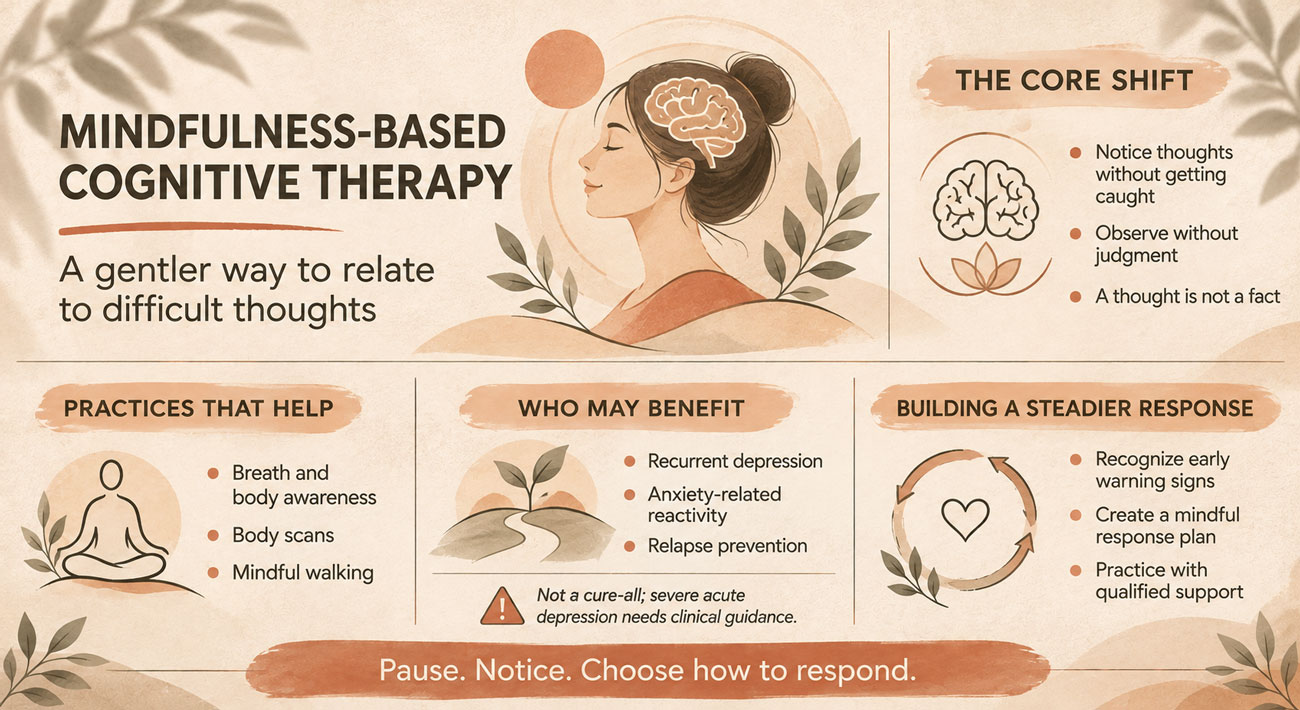
In clinical psychology, Mindfulness Based Cognitive Therapy (MBCT) operates as an evidence-based intervention blending secular mindfulness practices with cognitive behavioral frameworks. Independent researchers and medical bodies generally view it as a highly effective tool for preventing the relapse of recurrent major depression. Corporate professionals and healthcare systems increasingly look to it to manage the rising tide of mood disorders, anxiety, and emotional burnout.
MBCT is useful. We live in a society obsessed with optimizing every human experience. People treat meditation like a productivity hack to squeeze more output from a tired brain. It is not magic meditation. It is a highly structured therapy that teaches you to notice repetitive thoughts without getting dragged into them. That is a real skill. It is not a cure-all.
What Is the Core Psychological Mechanism?
Human beings spend a substantial amount of time living in their heads. When stress hits, the brain activates old neural pathways to figure out what went wrong. This problem-solving approach works well for fixing a broken sink. It is disastrous for processing complex emotions.
Thought Disengagement Process
Your brain tries to think its way out of suffering. This creates a loop. You feel a dip in your mood, you start analyzing why you feel bad, and the analysis itself makes you feel worse. The core mechanism of MBCT relies on recognizing this exact trap.
Instead of aggressively debating the content of negative thoughts like some traditional therapies might encourage, patients learn metacognitive awareness. You observe the mental chatter. You label it. You step back. You do not try to fix the thought.
Nonjudgmental Observation Skill
Most of us are brutally hard on ourselves. We judge our feelings. We feel anxious, and then we feel angry at ourselves for feeling anxious. Nonjudgmental observation breaks this secondary layer of distress. By paying attention to the present moment intentionally, you allow thoughts to rise and fall without attaching your sense of identity to them.
You learn that a thought is just a mental event. It is not a fact. This practice fosters immense emotional resilience because it stops the cascade of reactivity before it gains momentum.
Traditional Therapy Differences
Standard cognitive therapy techniques require you to interrogate your beliefs. You look for cognitive distortions. You gather evidence for and against your catastrophic predictions. That approach is incredibly effective for many mental health conditions.
MBCT takes a different route. It shifts the relationship to the thoughts rather than the content of the thoughts. You are not arguing with the inner critic. You are simply letting it speak while you focus on your breathing or bodily sensations. You cultivate a different mode of mind entirely.
How Do Therapists Integrate Cognitive Behavioral Principles?
Therapists blend these two worlds carefully. They use the structure of cognitive behavioral therapy to give mindfulness a clinical direction. You can see how CBT rebuilds resilience by systematically identifying triggers and behavioral responses. MBCT just adds a layer of experiential awareness to that very same framework.
Automatic Thought Recognition
Before you can change a pattern, you have to see it. Therapists guide patients through exercises designed to highlight automatic processes. A simple guided meditation might reveal how quickly the mind jumps to worst-case scenarios.
This is where the integration shines. The cognitive behavioral element provides the psychoeducation about how thoughts, feelings, and behaviors influence each other. The mindfulness element provides the real-time laboratory to watch this happen in your own head.
Deliberate Attention Shift
Once you recognize an automatic thought, you need somewhere else to put your attention.
Therapists teach specific skills to anchor the mind. They use body scans. They use mindful walking. This is not about distraction. It is about choosing where to allocate your cognitive resources. You can read a broader clinical overview within the Oxford Mindfulness Foundation curated list of foundational MBCT academic texts, curriculum manuals, and clinical instructor resources to understand how these attention shifts are sequenced over an eight-week program.
Relapse Prevention Strategies
The entire curriculum builds toward preventing future episodes of severe distress. Therapists help patients create an action plan.
-
Identifying early warning signs of depression and anxiety.
-
Mapping out specific mindfulness techniques to use when these signs appear.
-
Establishing routine meditation practices to maintain baseline emotional regulation.
-
Preparing for setbacks without attaching shame to them.
These strategies empower individuals to manage their own mental well-being long after the formal group sessions end.
Identify Ideal Candidates for Emotional Relapse Prevention
Throwing a single therapy at every problem is abysmal clinical practice. MBCT has specific applications where it truly excels, and other areas where its benefits are less pronounced.
Recurrent Major Depression
The strongest data exists for preventing another depressive episode. People who have experienced multiple bouts of depression possess neural pathways highly primed for relapse. A minor shift in mood can easily trigger a full depressive episode. MBCT disrupts that specific vulnerability.
High Episode History
Where I would actually rate it highly is for individuals with a history of three or more past depressive episodes. The data backing this is solid. Independent bodies consistently look at a 34% relative risk reduction in recurrent depression rates compared to usual care across a meta-analysis of 6 clinical trials (N = 593) specifically for this demographic. The intervention seems to work best for those who have deeply entrenched thought patterns that require significant decoupling.
Acute Episode Risks
Applying this therapy during acute, severe major depression requires extreme caution. The cognitive demands of meditation can overwhelm acutely ill patients.
When you are deeply depressed, sitting quietly with your own mind can be terrifying. It can exacerbate negative thinking and rumination. Clinical judgment is absolutely critical here. Patients in the middle of a severe episode often need immediate stabilization before they can handle the introspection required by mindfulness practices.
Compare Efficacy Against Maintenance Antidepressants
Many people want to avoid long-term medication. In Singapore, there is a distinct pressure to “push through” and avoid the stigma sometimes associated with psychiatric prescriptions. People want alternatives.
Relapse Risk Reduction
The numbers show that MBCT offers a highly credible option for maintaining recovery. It actively trains the brain to handle the very distress that medication chemically suppresses.
Medication Alternative Viability
The clinical outcomes are striking when placed side by side. Research indicates that the therapy is roughly comparable to maintenance antidepressants over a 15-month window.
|
Treatment Approach |
Primary Mechanism |
Long-Term Viability |
|---|---|---|
|
Standard Care (No Maintenance) |
Reactive crisis management |
High risk of recurrent depression |
|
Maintenance Antidepressants |
Chemical regulation of neurotransmitters |
Effective, but carries side effects |
|
MBCT |
Metacognitive awareness and emotional regulation |
Cost-effective, builds permanent coping skills |
Health organizations take this seriously. You can see this reflected in a National Institute for Health and Care Excellence (NICE) clinical guideline endorsing group MBCT as a cost-effective relapse-prevention treatment. It gives patients a choice. That choice matters immensely for personal agency.
Avoid Overhyped Wellness Claims and Unproven Applications
I would not throw money at this as a universal fix for every bad mood.
The wellness industry loves to package eastern philosophy into expensive retreats. They stick the word “mindfulness” onto everything from corporate team building to skin care. Do not confuse a certified clinical psychology intervention with a superficial wellness trend.
If you are dealing with your very first depressive episode, the advantage of MBCT is less clear. Standard CBT is just as effective for current depression. Perhaps a straightforward solution focused therapy approach meets your immediate needs.
We also see claims about using MBCT for chronic conditions, pain and illness, or severe addiction. While learning to observe physical sensations can marginally help with the distress of chronic pain, it does not erase the underlying physiological issues. We must be honest about what therapy can and cannot do.
Select Qualified Clinical Professionals for Treatment Guidance
Finding a practitioner requires diligence. You want someone who understands the nuances of mood disorders, not just someone who uses a meditation app.
Look for clinical professionals who have undergone specific training in both cognitive therapy and mindfulness meditation. They need to understand the architecture of depression and anxiety. They need to know how to handle a patient who dissociates during a body scan. This requires a trauma-informed lens.
Therapists utilizing focused mindfulness meditation within a clinical setting will respect your boundaries. They will not push you into prolonged silent meditation if your nervous system is dysregulated. They prioritize psychological safety over rigid adherence to a manual.
FAQ
Can Mindfulness Based Cognitive Therapy (MBCT) help with generalized anxiety? Yes, it can reduce the reactivity associated with anxiety. By training the mind to stay in the present moment, you spend less time catastrophizing about the future.
How is it different from MBSR? Mindfulness-Based Stress Reduction (MBSR) is a broader program focused on general stress and pain. MBCT specifically integrates cognitive therapy techniques to target the mechanisms of depressive relapse. You can review the NICE evidence review protocol defining MBCT mechanics, body-scan awareness, and distinction from standard MBSR for the exact clinical boundaries.
Do I have to meditate every day? The formal program usually asks for about 45 minutes of daily practice. The goal is to build a habit so strong that it becomes your default response to distress.
Is it done in a group or individually? It was originally designed as an 8-week group intervention. Group settings normalize the struggle, but many therapists adapt the core practices for individual sessions successfully.
Conclusion
We spend too much time trying to fix ourselves. We treat our minds like malfunctioning software that needs a patch. We optimize for output and quietly erode the conditions that make us feel human.
Mindfulness Based Cognitive Therapy (MBCT) offers a different path. It asks you to stop fighting the internal weather. It teaches you to sit with the messy, uncomfortable reality of your own thoughts. When you stop treating your anxiety or sadness as an enemy that must be destroyed, it loses its authority over you. You gain spaciousness. And in that spaciousness, you finally get to decide how you want to live.