
Last updated on September 6, 2026
When society discusses mental health, the collective imagination immediately defaults to a person unable to get out of bed, overwhelmed by sadness, weeping in a darkened room. We look for the obvious signs of distress. We expect the emotional collapse to be loud and obvious. The clinical reality is often more subtle. For high-performing professionals, active parents, and individuals navigating the immense pressure of daily responsibilities, a depressive episode rarely mirrors a sad movie montage. It looks like a system glitch.
Your normal coping tools stop working. The gym routine that usually clears your head suddenly leaves you exhausted. The weekend rest provides zero actual recovery. We diagnose these quiet changes in ourselves as burnout. We label our exhaustion as mere stress. We assume we just need to try harder to keep up with the script of constantly upgrading our lives. But ignoring the early signs of a failing psychological baseline carries heavy consequences. Recent federal tracking data reveals that an estimated 21 million U.S. adults experienced at least one major depressive episode during a single baseline tracking period. That figure betrays a massive, systemic failure to recognize what is actually happening within our own nervous systems.
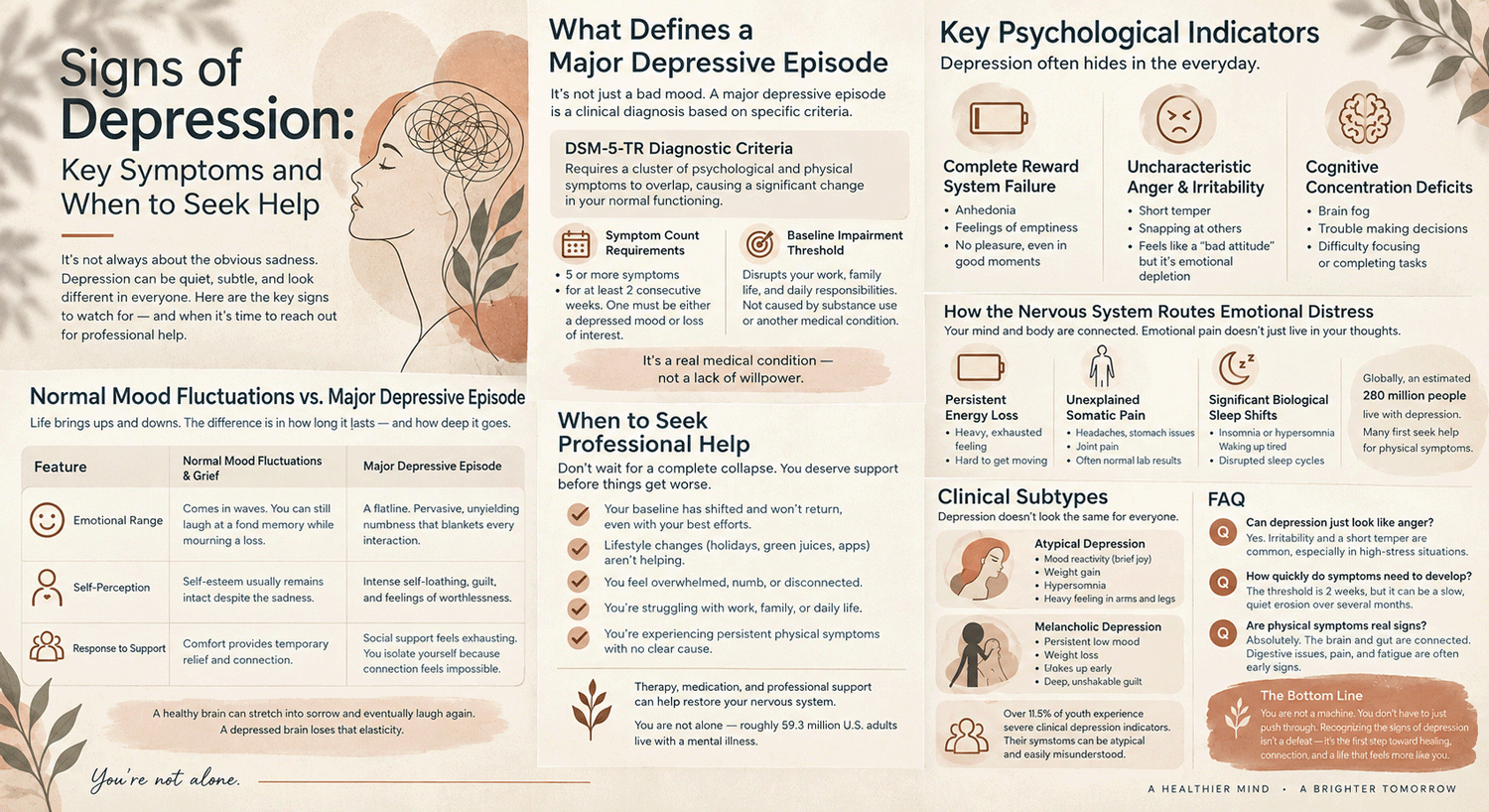
What Defines A Major Depressive Episode
The clinical consensus regarding mental health does not rely on subjective vibes or fleeting bad days. Major medical authorities utilize structured, uncompromising frameworks to determine when a human being has crossed the threshold from temporary distress into a legitimate medical condition.
DSM-5-TR Diagnostic Criteria
The definitive standard in the United States is governed by the American Psychiatric Association. Their diagnostic manual maps the exact boundaries of a major depressive episode. We are looking for a fundamental, observable departure from your normal state of functioning. It requires a specific cluster of psychological and physical symptoms to overlap simultaneously. You do not just feel off. Your entire internal operating system alters its processing speed.
Symptom Count Requirements
Diagnosing this condition requires a strict timeline and symptom count. You must exhibit five or more specific signs present for a minimum of two consecutive weeks. A fleeting bad mood over a long weekend does not qualify.
-
A deeply depressed mood lasting for most of the day
-
A near-total loss of interest in previously rewarding activities
-
Significant weight fluctuations or appetite changes
-
Observable psychomotor agitation or severe physical slowing
-
Daily fatigue that feels disproportionate to your actual physical exertion
One of these primary signs must be either the depressed mood or the complete lack of pleasure. The presence of these markers is heavily weighted in clinical settings. In fact, comparative evaluations of these diagnostic markers demonstrate that loss of interest and active suicidality heavily skew across severely depressed cohorts in standardized psychiatric studies.
Baseline Impairment Threshold
The distress must cause clinically significant functional impairment. The condition disrupts your occupational output. It strains your family life. You begin dropping the ball on basic obligations. This impairment cannot be attributed to recent substance use or a separate, underlying medical condition. It is an independent, heavy shroud that suffocates your normal capacity for resilience.
Psychological Indicators Of Hidden Emotional Distress
Depression is can be difficult to recognize. The symptoms nobody wants to talk about are the ones that inconvenience other people.
Complete Reward System Failure
Anhedonia is the clinical term for a broken reward system. You go through the motions of your existence. You cash the paycheck. You take the planned vacation. You hug your partner. Absolutely nothing registers in your brain. The dopamine hit simply fails to arrive. You are participating in your own life like feeling disconnected from your own life. This total failure of the reward system strips away your natural curiosity and leaves you hollow.
Uncharacteristic Anger And Irritability
Here is the sign people almost always misread. You start snapping at your coworkers over minor formatting errors. You yell at your children for dropping a spoon. Your threshold for frustration drops to zero. Everyone around you assumes you are just developing a terrible attitude. They label it temperament.
The reality is completely different. Your brain is utterly depleted. It can no longer tolerate external input the way it used to. The emotional distress is overwhelming your circuits, and it leaks out as hostility. This presentation is brutal. It means the person actively struggling with a mental health crisis is simultaneously becoming the bad guy in everyone else’s story.
Severe Cognitive Concentration Deficits
You open a routine email and stare at the words for twenty minutes. They look like a foreign language. Making a basic decision about what to eat for dinner feels paralyzing. This lack of clarity is not you losing your intelligence. It is your brain reallocating all available energy just to survive the psychological distress, leaving nothing left for executive function or critical thinking.
How The Nervous System Routes Emotional Distress
We often treat the mind and the body as if they exist in completely separate dimensions. They do not. Psychological pain demands to be felt. If you refuse to feel it emotionally, your body will force you to feel it physically.
Persistent Daily Energy Loss
This is a physical weight. Your limbs feel like they are filled with wet sand. Walking up a flight of stairs requires a monumental effort of will. It is a crushing, lead-like heaviness that sleep cannot cure.
Unexplained Somatic Pain
Your nervous system becomes the loud speaker for your silent emotional distress. You develop tension headaches. Your stomach constantly hurts. You experience vague, migrating joint pain. You schedule appointments with doctors looking for a tangible, physical cause. They draw blood. They check your organ function. The lab results come back perfectly normal. You leave the clinic feeling intensely confused. Globally, it is estimated that 280 million people live with depression, and a staggering number of these individuals first seek care for purely physical ailments that stem directly from their mental state.
Significant Biological Sleep Shifts
Your biological rhythms fracture. You either lie awake staring at the ceiling until 4 AM, or you sleep for fourteen hours and wake up feeling like you were still feel extremely tired. These episodes severely alter how your brain rests. The disruption induces profound physical variations like hypersomnia or terminal insomnia, a dynamic clearly documented within global clinical guidelines outlining altered sleep architectures. Your body simply forgets how to rest.
Differentiate Clinical Episodes From Normal Mood Fluctuations
Life involves pain. Bereavement is a necessary, unavoidable human process. Losing a job causes immense stress. The key difference between a normal emotional reaction and a clinical episode lies in elasticity.
|
Feature |
Normal Mood Fluctuations & Grief |
Major Depressive Episode |
|---|---|---|
|
Emotional Range |
Comes in waves. You can still laugh at a fond memory while mourning a loss. |
A flatline. Pervasive, unyielding numbness that blankets every single interaction. |
|
Self-Perception |
Self-esteem usually remains intact despite the immediate sadness. |
Characterized by intense self-loathing, overwhelming guilt, and feelings of worthlessness. |
|
Response to Support |
Comfort from friends or family provides temporary relief and connection. |
Social support feels exhausting. You isolate yourself because connection feels impossible. |
A healthy brain can stretch into sorrow and eventually snap back into a momentary laugh. A depressed brain loses that elasticity entirely. It is rigid.
Determine When To Seek Professional Psychiatric Intervention
Do not wait for a complete collapse to validate your suffering. You do not need to be actively planning self-harm to deserve compassionate care. The moment your baseline shifts and refuses to correct itself despite your best efforts, you must act.
When the holidays, meditation apps, the green juices, and the weekend distractions fail to move the needle, it is time to speak with a health care provider or a mental health professional. Engaging in evidence-based therapy or considering an antidepressant medication are profoundly responsible choices. They are tools designed to restore your nervous system. Navigating this requires an environment of psychological safety, allowing you to unpack the heavy expectations that might be driving your burnout. Remember that roughly 59.3 million U.S. adults lived with any mental illness during recent reporting periods. You are absolutely not navigating this terrain alone.
How Do Clinical Subtypes Alter Symptom Presentation
Depression refuses to follow a single script. Clinical subtypes drastically alter how the condition manifests. Atypical depression, oddly enough, features mood reactivity. You might actually feel a brief spark of joy when something positive happens. However, it is usually accompanied by extreme weight gain, hypersomnia, and a deeply uncomfortable, heavy sensation in your arms and legs.
Melancholic depression sits on the opposite end of the spectrum. Absolutely nothing lifts the low mood. People with this subtype often experience severe weight loss, wake up hours before their alarm, and battle a profound, unshakable sense of guilt. Recognizing these variations is crucial, particularly for younger demographics. Community health audits indicate that over 11.5% of youth experience severe clinical depression indicators nationwide, and their symptoms frequently present in highly atypical, easily misunderstood ways.
FAQ
Can depression just look like someone being angry all the time? Yes. Irritability and a remarkably short temper are primary signs, particularly in highly stressed professionals and adolescents. The nervous system is overtaxed, resulting in anger rather than visible sadness.
How quickly do these symptoms need to develop to be considered an episode? The diagnostic threshold requires symptoms to be present consistently for at least two weeks. However, the onset can be a slow, quiet erosion over several months before hitting that acute two-week threshold.
Are physical symptoms like stomach issues really a sign of a mental health condition? Absolutely. The brain and the gut are intimately connected. Unexplained somatic pain, digestive distress, and severe fatigue are often the very first signs that your psychological baseline is failing.
Conclusion
We spend so much of our lives optimizing for output. We measure our days by how much we accomplish, how quickly we respond to emails, and how seamlessly we manage our households. But human beings are not machines. You cannot just reboot a nervous system that has been running on fumes for a decade.
Recognizing the signs of a depressive episode requires a radical form of honesty. It demands that we stop pretending money, status, or behavioral compliance will somehow shield us from the messy reality of having a human brain. Healing starts with the quiet, often uncomfortable realization that your current operating system is failing. That realization is not a defeat. It is the necessary first step toward actual empowerment, allowing you to nurture a life that prioritizes deep, authentic connection over relentless, unquestioned endurance.