
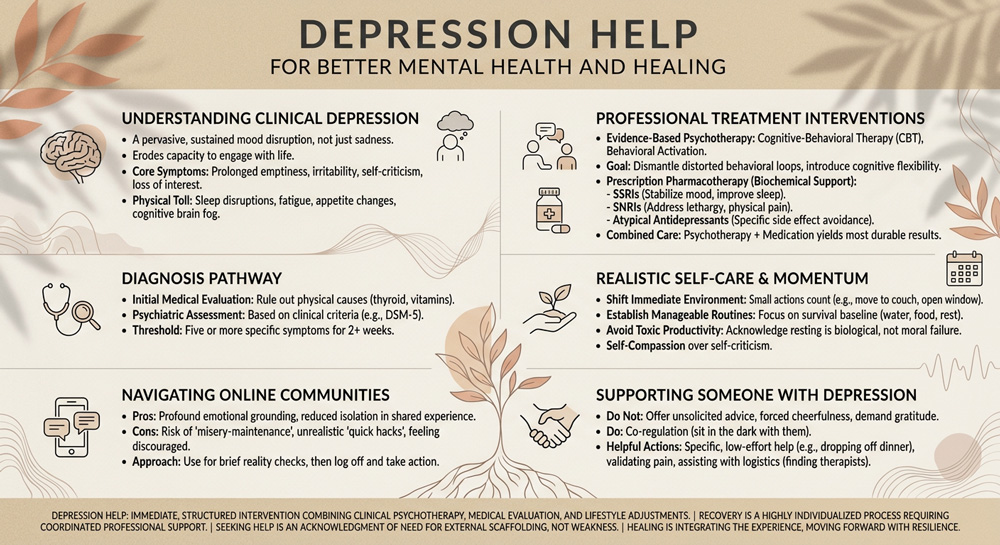
Finding effective depression help requires immediate, structured intervention combining clinical psychotherapy, sometimes thorough medical evaluation, and targeted lifestyle adjustments. The primary objective is to disrupt the cyclical nature of the condition through established therapeutic frameworks rather than relying on superficial wellness trends. Navigating this landscape means understanding that treatment is a highly individualized process, often requiring a coordinated team of mental health professionals to establish a baseline of psychological safety and cognitive function.
We live in a culture obsessed with optimization and aggressive scaling. Emotional pain is frequently treated as a productivity error to be patched. The reality is much heavier. People facing a mental health crisis do not need to be fixed or optimized for output. They need a grounded, trauma-informed pathway back to themselves. Seeking support is not a sign of weakness but an acknowledgment that the human brain occasionally requires external scaffolding to heal.
What Are the Core Symptoms of Clinical Depression?
Depression is rarely about the cinematic weeping we see on television. It usually arrives as a quiet, pervasive flattening of the world. The condition infiltrates both the mind and the body, eroding a person’s capacity to engage with their own life.
Psychological and Emotional Changes
The most prominent sign is a sustained mood disruption that colors every interaction. You might notice ongoing feelings of emptiness, irritability, or an overwhelming sense of undue guilt. The self-critical thoughts may become more frequent. Negative thinking loops relentlessly, convincing the person that they are fundamentally broken or a burden to others. A person experiencing these depression symptoms often loses interest in a new hobby, a beloved sports team, or any activity that previously brought joy. The psychological weight creates a profound inability to envision a future that feels safe or manageable.
Physical and Cognitive Disruptions
The brain is not a machine where you can just run an sql command to delete negative files. The physical toll of depression is profound and measurable. People experience drastic sleep patterns, vacillating between severe insomnia and hypersomnia. They face extreme fatigue where the simple act of taking a shower feels like climbing a mountain. Weight changes and shifting appetite are common. Cognitive disruptions include brain fog, restlessness, and a complete breakdown in concentration. The nervous system gets can feel persistently exhausted, turning minor daily tasks into much more difficult to manage.
How Do Doctors Diagnose a Depressive Disorder?
You cannot self-diagnose clinical depression through social media infographics. A proper diagnosis requires a clinical framework that rules out other medical conditions mimicking mental health struggles.
Initial Medical Evaluation
The first step is usually an appointment with a primary health care provider. They will conduct a physical exam to check for underlying biological causes. Thyroid disorders, vitamin deficiencies, and hormone imbalances can produce symptoms identical to major depressive disorder. Doctors will review any current medicines or dietary supplement st john wort usage, as certain natural products and medications carry severe psychological side effects. This biological baseline ensures that patients are not prescribed psychiatric treatments for physical ailments.
Psychiatric Assessment Criteria
Once physical anomalies are ruled out, a mental health professional evaluates the psychological landscape. They rely on established clinical diagnostic criteria detailed DSM-5 or reference places like the Mayo Clinic Major Depression Overview to map the severity and duration of the symptoms. To meet the threshold for a major depressive episode, an individual must display five or more specific symptoms for at least two consecutive weeks. Mental health conditions are heavily scrutinized to differentiate unipolar depression from bipolar disorder or trauma responses.
Professional Treatment Interventions for Depression
Real recovery relies on evidence-based care. The path forward usually involves a blend of modalities designed to rebuild cognitive resilience and emotional regulation.
Evidence-Based Psychotherapy
Therapy is the cornerstone of sustainable recovery. Major professional bodies outline clear standard clinical protocols in the APA Clinical Practice Guideline for Adult Depression, which strongly recommends cognitive-behavioral therapy and behavioral activation. These frameworks help dismantle distorted behavioral loops and introduce cognitive flexibility. Many clients eventually find profound progress through specialized Online Therapy for Depression, which removes the geographical and energetic barriers of commuting to a clinic. Therapy is where the slow, necessary work of relational repair happens.
Prescription Pharmacotherapy
For many, psychotherapy alone cannot pierce the thickest layers of a depressive episode. Antidepressants act as a necessary bridge, providing the biochemical stability required to actually participate in therapy.
-
Selective Serotonin Reuptake Inhibitors (SSRIs): Often the first line of defense, targeting serotonin levels to stabilize mood and improve sleep.
-
Serotonin and Norepinephrine Reuptake Inhibitors (SNRIs): Utilized when lethargy and physical pain accompany the emotional symptoms.
-
Atypical Antidepressants: Prescribed to avoid specific side effects like sexual dysfunction or extreme weight gain.
Combined Care Approaches
The most robust clinical trials indicate that combining psychotherapy with medication yields the most durable results, particularly for treatment resistant depression. Medication lowers the volume of the despair, while therapy teaches the patient how to navigate the quiet that follows. This dual approach facilitates A Holistic Recovery by addressing both the biological deficits and the emotional challenges simultaneously. For immediate crisis intervention, resources like the confidential treatment referral services available through the SAMHSA National Helpline Reference offer 24/7 emergency treatment guidance.
Use Realistic Self-Care Strategies to Build Momentum
When you’re feeling overwhelmed, someone yelling at you to swim harder is not helpful. Self-care during a depressive episode must be realistic and manageable.
Shift Your Immediate Environment
Action precedes motivation. You do not have to feel good to change your immediate scenery. If staying in bed is pulling you under, moving to the couch is a victory. Opening a window to let fresh air circulate is an intervention. These micro-shifts prevent the brain from cementing itself into a state of total paralysis. Exploring subtle physical grounding techniques can offer gentle Depression Relief without demanding intense physical exertion.
Establish Manageable Daily Routines
Throw away the aggressive morning routines favored by productivity influencers. Focus on a baseline of survival. Drink water. Eat food that requires zero preparation. Engage in moderate exercise only if a short walk feels accessible, not as a punishment for being inactive. True self care borrows heavily from the compassion frameworks pioneered by researchers like Dr. Kristin Neff, treating yourself with the gentleness you would offer a sick friend.
Avoid Toxic Productivity Traps
We are conditioned to measure our worth by our output. Depression strips away your capacity to produce, leaving behind intense shame. Acknowledge that resting is a biological requirement, not a moral failure. Healing requires The Power of Self-Acceptance for Inner Healing Growth. Self-compassion is generally more supportive than self-criticism during recovery.
Navigate Online Mental Health Communities With Caution
The internet is a very strange place to heal. Online spaces like Reddit’s mental health forums operate as a double-edged sword. On one side, they offer profound emotional grounding. When you are at your absolute lowest, reading anonymous accounts from people describing the exact heavy, foggy paralysis you feel can pierce the isolation. It is one of the few places where people speak from inside the problem without performing wellness.
However, these threads easily devolve into misery-maintenance. Scrolling through endless accounts of unmitigated suffering can make it feel as though into believing that recovery is impossible. Furthermore, the relentless lists of quick hacks pushed in some communities create a trap. If drinking cold water or doing breathing exercises does not instantly cure your clinical depression, you feel like you have feel discouraged. Use these platforms for a ten-minute reality check to remind yourself you are not alone, take several actions toward actual professional help, and then log off.
How Can You Support Someone With Depression?
Watching someone you love disappear into depression is terrifying. The instinct is to encourage them to feel better with forced cheerfulness or unsolicited advice about joining a community project or a hobby group. Resist this urge.
Support looks like co-regulation. It is sitting in the dark with them and proving that you are not going to abandon them just because they are no longer “fun.” Help them with the logistics of survival. Wash their dishes. Drop off groceries. Offer to sit next to them while they make the agonizing phone call to a healthcare provider. Do not demand gratitude, and do not make their illness about your inability to fix them.
|
Helpful Support Actions |
Unhelpful Reactions |
|---|---|
|
Offering specific, low-effort help (e.g., “I am dropping off dinner at 6 PM”) |
Vague offers (e.g., “Let me know if you need anything”) |
|
Validating their exhaustion and pain |
Pointing out how good their life actually is |
|
Assisting with researching therapists |
Sending links to motivational podcasts |
FAQ
How common is clinical depression? It is staggeringly common. The latest lifetime diagnosis rates detailed by the American Psychiatric Association Patient Information indicate that nearly 29% of adults will experience depression at some point. Furthermore, recent prevalence metrics from the CDC Depression Prevalence Data Brief show rising rates across multiple demographics.
Can lifestyle changes replace medication? While physical activity, improved sleep hygiene, and a balanced diet significantly impact brain health, they are rarely sufficient to cure a severe major depressive episode on their own. They are supportive therapies, not primary cures.
Does depression ever completely go away? For some, it is a singular episode. For others, it is a chronic condition that requires lifelong management. However, with the right combination of psychotherapy and lifestyle adjustments, the severity and frequency of episodes can be drastically reduced.
Conclusion
The journey out of depression is rarely a straight line. It is a messy, deeply human process of trial, error, and gradual awakening. We must stop demanding instant results from nervous systems that are fundamentally exhausted. Recovery happens in the quiet moments of choosing to stay, choosing to try one more therapist, and choosing to believe that the symptoms will eventually lift. Healing is not about returning to the person you were before the depression hit. It is about integrating the experience and moving forward with a deeper, more resilient understanding of your own humanity.