
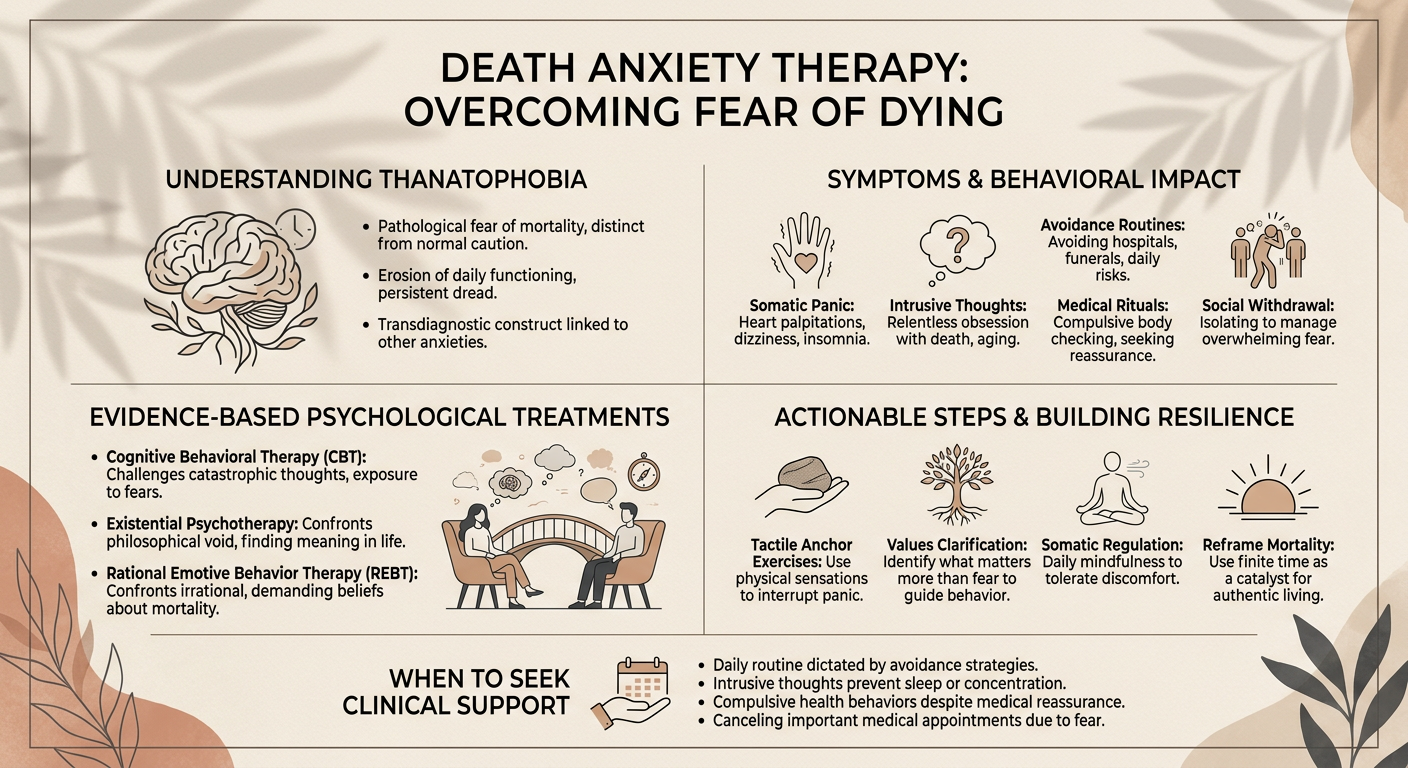
The clinical consensus surrounding end-of-life distress dictates that death anxiety therapy revolves around structured interventions designed to alleviate pathological fears of mortality. These interventions typically combine cognitive behavioural therapy, somatic regulation, and existential frameworks to help patients process their profound dread.
People frequently step into a therapist’s office, sit in the office, and express that they feel profoundly overwhelmed because they cannot stop obsessing over the end of their lives. They assume that recognizing human fragility is a symptom of failure. Corporate professionals chasing the relentless cycle of promotions and property upgrades often hit a wall in their thirties or forties. The sudden, overwhelming realization of their own mortality eclipses the temporary satisfaction of a new title or an expanded investment portfolio. This isn’t just about an isolated phobia. Mental health organizations emphasize that thanatophobia can drive other psychological issues like phobias and bodily anxiety, acting as an invisible engine behind seemingly unrelated mental health problems.
What Distinguishes Thanatophobia From Normal Fear?
A healthy respect for danger prevents a person from stepping into oncoming traffic. Thanatophobia prevents them from walking out the front door. The distinction lies in the absolute erosion of daily functioning. Normal fear is proportional and situational. Extreme fear regarding dying becomes a rigid, unyielding filter through which an individual views every mundane event.
|
Clinical Marker |
Normal Death Awareness |
Pathological Thanatophobia |
|---|---|---|
|
Frequency |
Occasional reflection, usually prompted by an event. |
Intrusive, daily obsessive thoughts disrupting routines. |
|
Behavioral Impact |
Motivates future planning or relational connection. |
Causes severe avoidance, social isolation, and panic. |
|
Physical Response |
Mild, transient sadness or contemplation. |
Chronic nervous system arousal, sleep disturbances, nausea. |
Transdiagnostic Phobia Triggers
Existential concern rarely stays neatly confined to one psychiatric category. Clinical data increasingly positions death fears as a transdiagnostic construct. Experts generally agree that psychotherapies, particularly existential therapy, cognitive behavioral therapy (CBT), and rational-emotive therapy, are effective at reducing mortality-related fear and improving overall psychological well-being. A patient might originally seek Psychodynamic Therapy for Anxiety Relief for what appears to be severe social anxiety or intense fear of contamination. A skilled therapist often digs beneath the surface compulsions to find a terrified inner child trying desperately to exert control over the ultimate biological uncertainty.
Somatic Panic Symptoms
The body keeps an immaculate, physical ledger of unspoken terrors. When a person fixates on their impending demise, the nervous system rarely differentiates between a philosophical thought and physical threat in the immediate environment. This manifests as a full-blown panic attack. Heart palpitations, shallow breathing, dizziness, and chronic insomnia become the physical reality of an abstract concept. Somatoform disorders can develop, where the sheer weight of existential dread creates inexplicable physical pain.
Intrusive Existential Thoughts
Cognitive loops tighten around the mind like a vice. People suffering from this level of distress endure relentless unhelpful thoughts about the process of aging, the nature of corpses, and the permanence of graveyards. These obsessions mimic a severe compulsive disorder. The brain tries to solve the unsolvable problem of death by thinking about mortality incessantly, hoping that sheer mental repetition will eventually yield a feeling of security. It never does.
How Does Chronic Mortality Fear Impact Behavior?
Fear demands a behavioral response. When the mind is convinced that existence itself is an immediate threat, individuals construct elaborate, exhausting defense mechanisms. These routines are rarely perceived as irrational by the person executing them. They feel like vital survival tactics.
Severe Avoidance Routines
Avoidance becomes the dominant language of the distressed mind. Someone might stop attending family gatherings or refuse to visit hospitals, terrified that proximity to illness will somehow contaminate their own timeline. This avoidance behaviour frequently spirals into secondary conditions like aerophobia or claustrophobia. Even everyday tasks require immense negotiation. Someone might develop severe driving anxiety, convinced that a fatal collision is statistically inevitable every time they start the engine.
Medical Reassurance Rituals
The human brain is remarkably adept at turning health into an obsession. Health anxiety and illness anxiety frequently serve as the acceptable public faces of death anxiety. Patients engage in compulsive body checking, monitoring their pulse, scanning their skin for blemishes, and demanding constant reassurance from medical professionals. They schedule endless diagnostics. They scour medical forums at three in the morning. This ritualistic behaviour provides a fleeting illusion of control while simultaneously reinforcing the underlying psychopathology.
Chronic Social Withdrawal
The world shrinks. Relationships require energy, vulnerability, and a baseline sense of safety. When a person is entirely consumed by the fear of dying, maintaining authentic connections feels like a monumental, impossible task. The social withdrawal is often subtle at first. Canceled dinners. Ignored texts. Eventually, the isolation becomes profound.
Evaluate Evidence-Based Psychological Treatments
Therapists do not possess a magical formula to cure mortality. The clinical objective is to change the relationship with the fear, shifting the patient from paralyzed dread to functional awareness.
Cognitive Behavioral Modalities
Cognitive behaviour therapy remains a cornerstone for treating phobic disorders. CBT helps individuals map out their catastrophic thought patterns and systematically challenge the evidence supporting their panic. A core component often involves exposure therapy, where patients are gently and safely introduced to the concepts, locations, or situations they have aggressively avoided. A widely cited study hosted by the National Library of Medicine observed an 86% reduction in anxiety via CBT protocols specifically adapted for end-of-life concerns.
Existential Psychotherapy Frameworks
Existential psychology directly addresses the philosophical void. Practitioners operating within this framework recognize that a life lived strictly to avoid death is entirely devoid of meaning. Drawing heavily from terror management theory, therapists guide patients to confront their existential questions rather than medicate them away. Meaning in life acts as a vital mediator. When someone constructs a life rooted in deep, authentic connection and purpose, the frantic need for absolute biological safety diminishes.
Rational Emotive Interventions
Rational emotive behaviour therapy forcefully challenges the irrational beliefs underpinning the distress. The methodology confronts the demanding, absolutist language people use regarding their health. Patients learn to replace the rigid belief that they “must not die anytime soon” with a more flexible, realistic appraisal of human vulnerability. It strips away the shame of being fragile.
Apply Daily Resilience Tactics For Distress
Clinical interventions require daily, practical reinforcement. Insight without action rarely changes the neurobiology of fear.
Tactile Anchor Exercises
When a panic attack accelerates, the mind disconnects from the present environment. Grounding techniques provide a necessary physical anchor. Holding a piece of ice, feeling the texture of a wooden chair, or focusing intensely on the sensation of bare feet on a cold floor can interrupt the escalating somatic feedback loop. These tactile anchors force the brain to process immediate sensory data rather than future catastrophes.
Values Clarification Practices
Navigating intense fear often requires identifying what matters more than the fear itself. This is where Acceptance and Commitment Therapy for Anxiety: What is the main goal of ACT for anxiety? becomes incredibly useful. By clarifying deeply held personal values, individuals create a roadmap for behavior that bypasses their phobias. If family connection is a core value, that value becomes the leverage needed to tolerate the discomfort of leaving the house.
Somatic Regulation Routines
The nervous system requires deliberate, consistent pacing. Daily meditation, specifically mindfulness practices designed to tolerate discomfort rather than escape it, builds profound emotional resilience. Regular somatic tracking helps individuals notice their bodily sensations without immediately attaching a catastrophic narrative to a random muscle twitch or a momentary shortness of breath.
Reframe Mortality As Personal Motivation
Death acceptance is rarely a passive, serene state achieved on a mountaintop. It is usually a messy, negotiated peace treaty with reality. Acknowledging that time is finite can actually serve as a radical catalyst for living authentically. It strips away the superficial concerns regarding status, corporate accolades, and the relentless pressure to perform. People often find that when they stop fighting the reality of their mortality, they finally have the energy to engage deeply with the people right in front of them. The American Psychological Association (APA) frequently notes that addressing these issues therapeutically allows individuals to transition from panic to profound spiritual clarity.
Does Religious Belief Reduce Existential Dread?
The relationship between spirituality and death anxiety is notoriously complex. For some, a concrete religious framework provides immense comfort, offering a structured narrative about what happens after the physical body fails. The promise of an afterlife can act as a powerful buffer against existential terror. However, clinical observation frequently reveals the opposite effect. Rigid religious doctrines centered on punishment, judgment, or spiritual failure can severely exacerbate the fear of dying. When religious belief is used to induce shame, the therapy process must carefully disentangle the patient’s inherent worth from their fear of divine retribution.
When Should Patients Seek Clinical Support?
Determining the line between normal philosophical pondering and a clinical mental health condition requires looking closely at daily impairment. Professional intervention is usually warranted when specific thresholds are crossed.
-
You cancel important medical appointments because the fear of receiving a bad diagnosis outweighs the need for preventative care.
-
Your daily routine is heavily dictated by avoidance strategies, such as mapping routes to avoid driving past cemeteries or hospitals.
-
Intrusive thoughts about dying prevent you from sleeping, concentrating at work, or being emotionally present with your children.
-
You engage in compulsive health behaviors, checking your body for symptoms multiple times a day despite reassurance from physicians.
Untangling these embedded behaviors often requires a structured environment. Exploring options like Group Therapy for Anxiety: What You Need to Know can provide a powerful space where individuals realize they are not uniquely broken in their terror.
FAQ
Can extreme fear of death be cured entirely? Psychotherapy does not erase the biological reality of mortality or the natural instinct for survival. The goal is symptom management and psychological flexibility. Effective treatment reduces the intense panic and compulsive avoidance, allowing the individual to live fully alongside the awareness of death, rather than being paralyzed by it.
Is health anxiety the same thing as thanatophobia? They are closely linked but distinct. Health anxiety focuses intensely on the mechanics of illness, the fear of developing a specific disease, and the physical symptoms themselves. Thanatophobia is the broader, existential dread of the state of being dead or the process of dying. Many Cleveland Clinic resources highlight how one often fuels the other.
How do I support a partner dealing with this specific anxiety? Validation must precede logic. Do not try to aggressively debate their fears with statistics about life expectancy. Offer co-regulation through a calm presence. Acknowledge their distress without validating the catastrophic thought, and gently encourage them to utilize their therapeutic coping strategies. Reading up on Relationship Anxiety: Signs, Treatment, & Support can also help partners navigate the emotional toll these phobias take on interpersonal dynamics.
Conclusion
The pursuit of absolute certainty regarding our biological expiration is a zero-sum game. We spend astonishing amounts of energy trying to outmaneuver the one universal human guarantee, sacrificing our current vitality in a doomed effort to secure an endless future. Navigating death anxiety therapy requires immense courage. It asks individuals to sit quietly with the ultimate unknown and, eventually, to let the reality of their own impermanence teach them how to actually be alive.