
Introduction
Family therapy for mental health treats psychological distress not as an isolated issue inside one person but as a symptom of the emotional ecosystem they inhabit. We live in a society deeply obsessed with individual optimization. Fix your mindset. Meditate your stress away. Go to a clinical room for fifty minutes once a week and cure your depression. I suspect this highly individualized approach misses the reality of how humans actually function. Treating one kid like they exist in a vacuum is a lousy plan.
When families walk into a clinic expecting a licensed mental health professional to repair a struggling child, they are asking to treat a symptom while ignoring the environment. A child acting out is often carrying the unspoken tension of the entire household. In a struggling household, you quickly learn to read the room. There are certain things you should never ask for, and certain moods you must tiptoe around. When a child grows up managing parental stress, they develop coping mechanisms that look like anxiety or defiance. The entire family unit requires attention, because healing an individual only to send them back into a highly critical home guarantees regression.
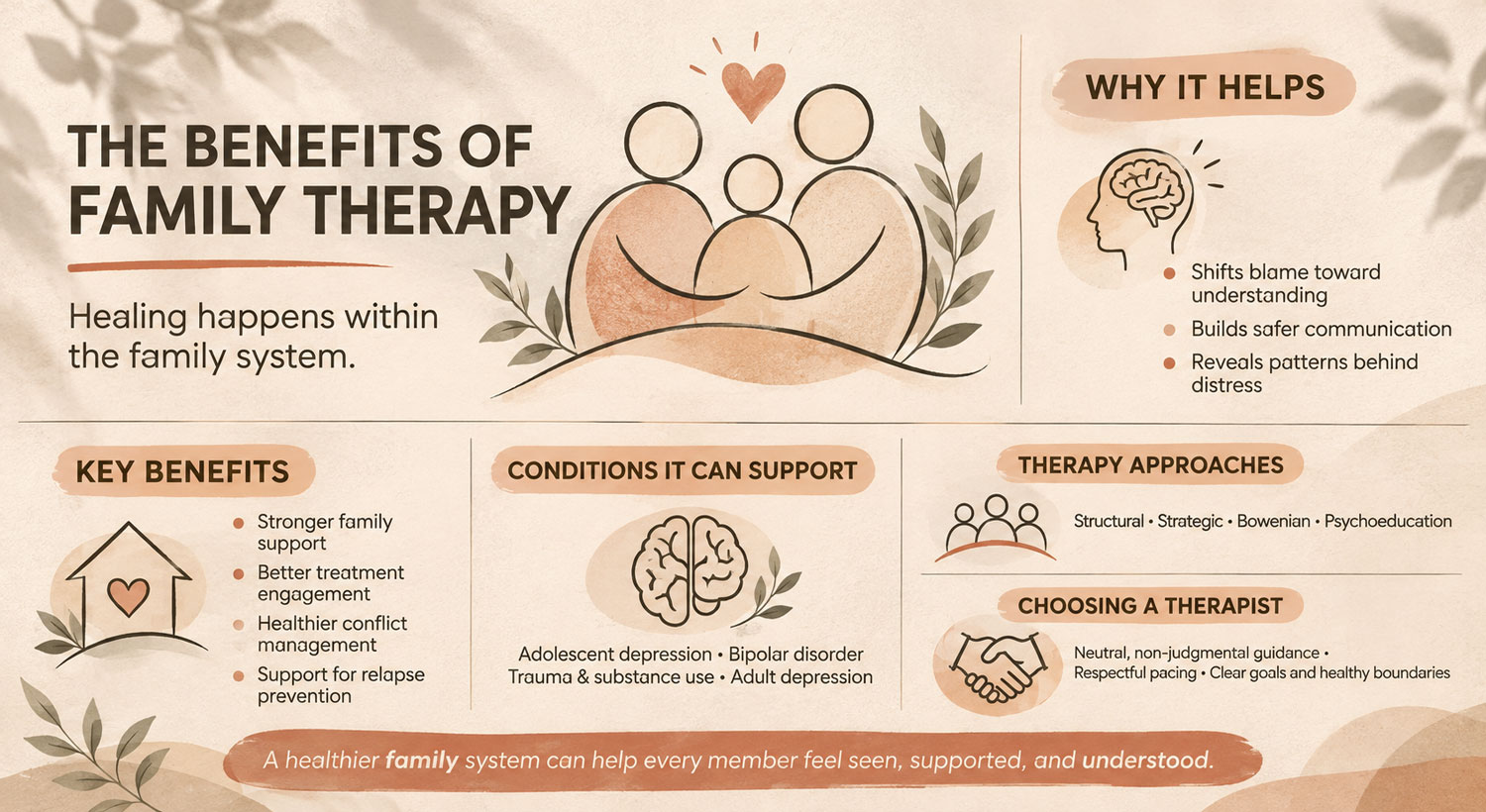
What Is the Purpose of Family Counseling?
Behavior adapts to its environment. A teenager slamming doors or a partner shutting down emotionally rarely happens by accident. These actions respond to a highly calibrated web of family dynamics. Counseling shifts the lens from blame to curiosity. We stop asking who is at fault and start mapping the emotional operating system of the household. The purpose is to move beyond mere behavioral compliance. A child who stops yelling because they are terrified of punishment has not learned emotional regulation. They have simply learned that bigger people can enforce silence on smaller people.
Core Clinical Concepts
The primary objectives of relational therapy focus on restructuring how a household handles distress. Mental health professionals evaluate distinct systemic patterns instead of isolating a single specific issue:
-
The profound emotional weight of unsaid expectations placed upon children and adolescents.
-
The generational scripts dictating how conflict is historically managed and buried.
-
The specific communication styles that inadvertently trigger anxiety in a loved one.
-
The critical balance between earned authority and enforced power within the home.
This evidence-based approach builds psychological safety. Clinical data confirms that systemic family therapy matches or exceeds individual therapy outcomes short- and long-term, proving that treating the group is often superior to isolating the patient. It provides clarity. You cannot teach a teenager mindfulness if their parents respond to every minor inconvenience with shouting.
Typical Session Structure
Sessions rarely resemble the chaotic shouting matches depicted on television. A compassionate practitioner guides the conversation carefully, acting as a human-first facilitator rather than a referee. The waste of money is bad family therapy where a therapist picks a side or pushes people to disclose trauma before they are ready. Good therapy demands safety. It is also surprisingly efficient. The process does not drag on for decades. Data indicates that treatment plans are remarkably focused, often averaging 9 sessions for family therapy rather than stretching into an endless, aimless commitment.
Why Involve Relatives in Psychological Treatment?
We optimize for output and quietly erode the conditions that make people feel seen. It is a devastating trade-off. Bringing loved ones into the clinical space radically alters the trajectory of recovery.
Treatment Retention Rates
Patients stay in treatment longer when their loved ones sit beside them. Solo care frequently leads to burnout and dropout because the individual feels entirely exposed and burdened. Having a parent or sibling actively engaged shifts the weight of healing. Each session attended increases odds of mental health treatment completion by a 1.4-fold margin, demonstrating that the family acts as a crucial anchor. The unit provides the momentum that an exhausted individual simply cannot generate alone.
Symptom Relapse Prevention
Relational repair requires continuous co-regulation. A well-structured family intervention fundamentally alters how a household manages its collective stress. Instead of waiting for a breakdown, the family learns to identify the early warning signs of an episode. Over time, these holistic approaches lower overall delivery and long-term intervention costs because the family stops paying for perpetual crisis management and starts investing in sustainable connection.
Which Psychiatric Conditions Benefit From Joint Sessions?
Not all mental health conditions present the same way, but almost all of them disrupt the family ecosystem.
|
Psychiatric Condition |
Primary Therapeutic Goal |
Expected Clinical Outcome |
|---|---|---|
|
Adolescent Depression |
Enhancing parental support and reducing home conflict |
Lowered suicidal ideation and improved mood |
|
Severe Bipolar Disorder |
Stabilizing routines and medication adherence |
Reduced symptom recurrence |
|
Trauma and Substance Abuse |
Uncovering emotional triggers driving addiction |
Sustained abstinence and connection |
|
Adult Primary Depression |
Shifting rigid expectations and fostering empathy |
Enhanced daily functionality |
Youth Suicide and Depression
Adolescents navigating severe depression or suicidal ideation desperately need their caregivers. Studies consistently show that family-focused care reduces suicidal ideation in adolescents significantly more than other active treatments. Utilizing family therapy for anxiety that strengthens families provides a vital foundation for recovery. The physical recovery outcomes are equally striking. Full remission was achieved by 49% of adolescent anorexia patients at 12-month follow-up under Family-Based Treatment, a stark contrast to those fighting the illness alone.
Severe Bipolar Disorder
Bipolar disorder can impact daily predictability. The manic highs and depressive lows exhaust caregivers. Medication is strictly necessary but insufficient alone. Relational therapy reduces illness recurrence when paired with psychiatric care. It helps relatives separate the person from the illness, fostering deep empathy rather than resentment. Current psychological consensus proves that these systemic models cut across adult schizophrenia, affective mood disorders, and deep-rooted behavioral conditions.
Trauma and Substance Abuse
Addiction isolates the sufferer. Exposure-based integrative therapy safely reduces substance-using days and posttraumatic stress avoidance symptoms. The therapist does not judge the addiction. They unearth the emotional function of the substance abuse. Discovering what happens in therapy during these sessions reveals a deeply collaborative process aimed at uncovering the wounds that drugs or alcohol are attempting to soothe.
Adult Primary Depression
Adults suffer under the weight of silent expectations. Integration of family involvement alongside manual-based psychotherapy drives recovery in adult depression. Spouses need to understand the cognitive restructuring happening in the clinic. When families ask how does therapy improve daily functionality, the answer lies in their ability to practice new boundaries together without taking personal offense.
Core Models of Relational Psychotherapy
Therapists do not just guess; they rely on established frameworks, meaning the common therapeutic models for relationships fall into a few distinct categories.
Structural Intervention Approaches
This model looks directly at hierarchy. Who actually holds the power in the household? A child who dictates the mood of the entire home has too much power. The therapist works to reestablish healthy boundaries between parents and children, ensuring that caregivers act as confident leaders rather than anxious bystanders.
Strategic Technique Applications
Strategic therapy focuses on specific problems. It is highly directive. The counselor assigns homework designed to disrupt negative patterns of behavior. It bypasses endless analyzing and forces immediate, practical shifts in how members interact during their daily routines.
Bowenian System Concepts
We carry our ancestors with us. Bowenian therapy examines the multigenerational transmission of trauma. The past lives vividly in the present. This approach maps out how your grandparents handled conflict and reveals how those exact inherited methods are currently impacting your marriage and your children.
Psychoeducation Frameworks
Sometimes a family just needs concrete information. Psychoeducation involves teaching families about specific mental health conditions. Understanding the neurology of an anxiety disorder prevents a well-meaning parent from punishing a child for a biological panic attack.
Choose the Right Clinical Professional
A poorly trained counselor may cause harm. I highly recommend looking for someone warm or exploring fit at the start. Do not assume any practitioner with a sign on their door is the right fit for you. A well trained or licensed marriage and family therapist can fosters empowerment and prevent sessions from evolving into screaming matches.
Look for a family therapist who demonstrates:
-
A strict commitment to not taking sides during high-conflict discussions.
-
An ability to adapt pacing so no one is pushed to disclose trauma prematurely.
-
A clear strategy for moving the family unit toward independence and self-sufficiency.
How Long Do These Sessions Typically Last?
Therapy is a tool, not a permanent lifestyle. You are not signing up for a lifetime subscription to a clinic. Most families see significant movement in a few months. An overwhelming ~90% emotional health improvement rates reported by consumers indicates that dedicated, short-term intervention yields massive returns. The goal is to build resilience and get the family out of the clinic so they can actually live their lives.
What if a Household Member Refuses Participation?
You cannot force healing on someone who refuses to look at their own reflection. Start with whoever is willing to show up. Group psychotherapy dynamics inevitably shift even if only two members change their behavior. If a mother and daughter begin communicating with clarity and respect, the father who refused to attend will still have to adapt to this new environment. Growth forces the entire system to adjust, regardless of who is sitting on the couch.
FAQ
Do parents get blamed for their child’s illness? No. A competent marriage and family therapist maps out patterns without assigning villainy. The focus remains strictly on nurturing future interactions, not litigating the past.
Does insurance cover these sessions? Many plans cover family counseling when it targets specific health problems or severe life transitions, though you should always verify with your specific provider.
Can grandparents be included? Absolutely. Anyone who significantly impacts the family psychology or daily caregiving routines belongs in the room.
Conclusion
We are relational creatures. Our pain is relational, and our healing must be relational too. Individual therapy certainly has its place, but sending a fortified individual back into a highly dysfunctional environment is a recipe for disaster. Embracing a systemic approach requires deep courage. It demands that we look closely at our own contributions to the tension in our homes. But the return on that investment is a household capable of weathering the profound challenges of being alive.