
Prenatal and postpartum relationship therapy effectively buffers against perinatal mood disorders and perinatal distress, reduces depressive symptoms, and preserves couple satisfaction during the transition to parenthood. We often treat the arrival of a baby as an entirely logistical puzzle. Couples spend countless hours researching the safest car seats or agonizing over the perfect nursery paint colors. We optimize for the material realities of childbirth. We buy the right gear. We read the sleep training books. We expect that reading enough manuals will somehow shield us from the life-changing transition that occurs when a new human enters the home.
The reality of early parenthood rarely matches the heavily curated aesthetic we see online. You bring an eight-pound infant into your home, and suddenly the script of constantly upgrading your life feels incredibly heavy. The ambient pressure of modern society dictates that we must excel at work, maintain a pristine home, and raise perfectly regulated children simultaneously. This impossible standard turns the perinatal period into a high-stress season that demands an entirely new internal operating system. Couples therapy like The Gottman Method during this window provides the scaffolding necessary to survive that transition.
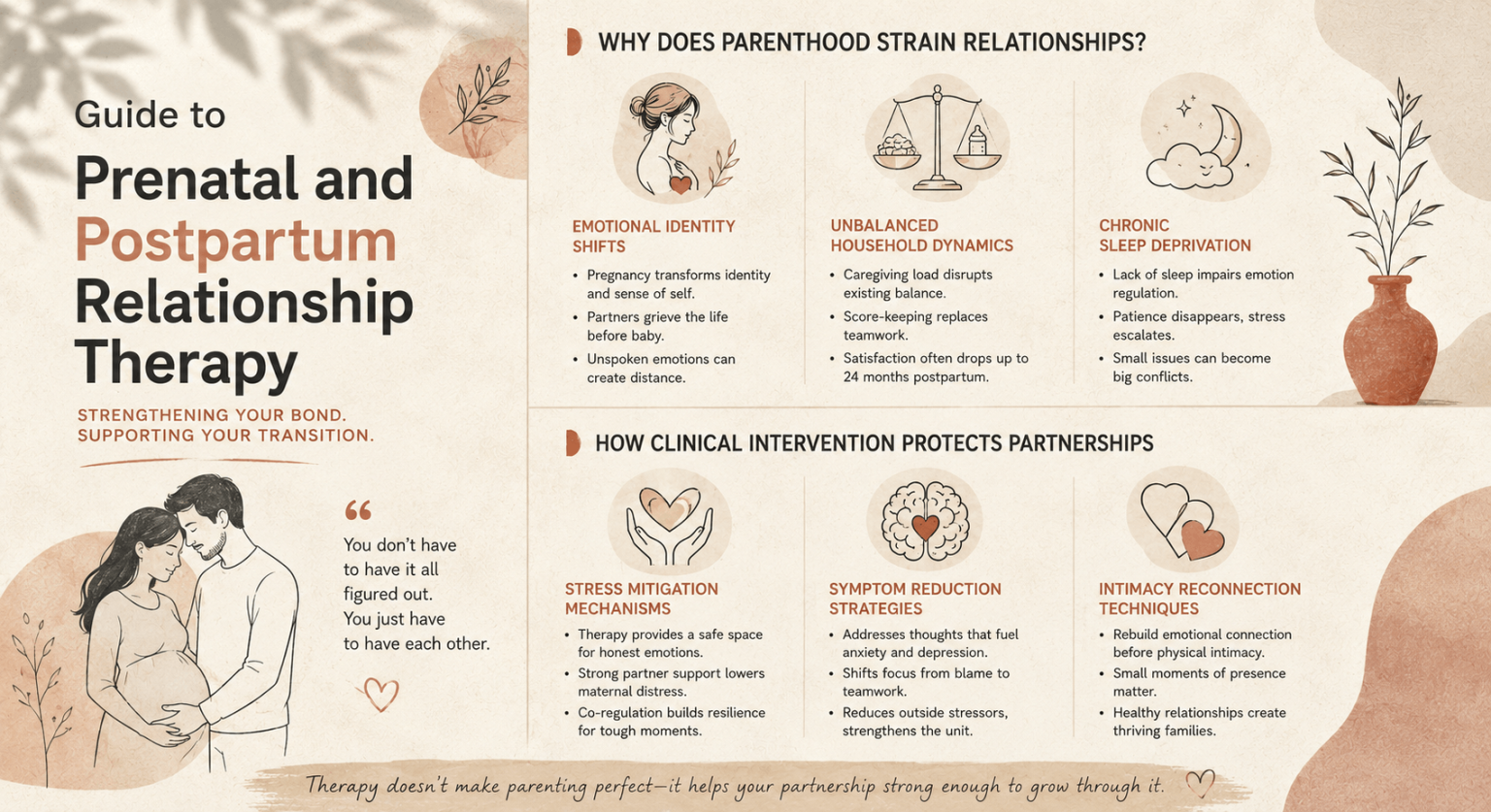
Why Does Parenthood Strain Relationships?
The transition to parenthood exposes the invisible fault lines in a partnership. We bring our own childhoods, our unexamined assumptions, and our deeply ingrained money psychology right to the crib side. A couple that previously functioned smoothly often discovers that their conflict resolution skills were entirely dependent on getting eight continuous hours of sleep.
Emotional Identity Shifts
Pregnancy forcefully rewrites a person’s sense of self. The mother experiences profound physical and psychological alterations. Her body becomes a public space. Her internal emotional experience shifts dramatically as she navigates prenatal stress and the looming reality of motherhood. Partners undergo an equally complex, though less visible, transition. They watch the person they love change while trying to figure out their new role. There is often a quiet grief for the life that existed before the baby home became a reality. We rarely talk about this grief because society demands relentless gratitude from new parents. This unspoken tension festers.
Unbalanced Household Dynamics
Before a baby, household chores might have been divided somewhat equitably. After the birth, the sheer volume of constant caregiving pressure breaks most existing systems. Score-keeping becomes the default language of the relationship. Exhausted parents begin tracking every diaper change and every midnight feeding like keeping score against each other.
This transactional dynamic weakens connection. Extensive meta-analytic findings confirming a medium decrease in marital satisfaction extending out to 24 months postpartum highlight just how universally devastating these structural shifts can be. We start seeing our partners as obstacles to our own rest rather than allies. We listen to respond with our own grievances rather than listening to understand.
Chronic Sleep Deprivation
Research shows physical exhaustion affects neural circuits in the very structures underlying emotional regulation. A parent who has not slept more than three consecutive hours in weeks is biologically compromised. Higher-order thinking vanishes. Patience evaporates. The brain interprets prolonged sleep deprivation as a continuous threat, leaving parents in a state of hypervigilance. Conversations that would normally require a mild adjustment suddenly escalate into existential arguments about the future of the relationship.
How Clinical Intervention Protects Partnerships
Therapy does not magically grant a couple more sleep or fewer bills to pay. It alters how a couple processes those exact same stressors. Professional counseling creates a designated container for the messy, contradictory emotions that new parenthood provokes.
Stress Mitigation Mechanisms
A compassionate therapeutic environment allows couples to stop managing their image. They can admit they are terrified. They can admit they miss their old lives. There is compelling research data demonstrating that high-quality, supportive partner relationships during pregnancy directly predict lower maternal emotional distress after birth. When parents co-regulate their nervous systems in the therapy room, they build the resilience needed to handle a screaming newborn at two in the morning.
Symptom Reduction Strategies
Perinatal therapy targets the specific cognitive distortions that fuel postpartum depression and anxiety. When an exhausted parent begins worst-case thinking, an evidence-based approach helps ground them back in reality. Therapists guide couples away from criticizing each other’s parenting techniques and toward a unified front. Reducing outside stressors and focusing strictly on the family unit provides immense relief.
Intimacy Preservation Techniques
Couples often assume intimacy only means physical affection. In the perinatal period, intimacy is often found in shared vulnerability. Cultivating a deep, foundational couple friendship acts as a primary buffer against isolation. When therapists help partners rediscover their basic curiosity about one another, the relationship transforms from a purely administrative partnership back into a romantic connection.
Proven Modalities for Perinatal Distress
Clinical psychology offers several distinct frameworks tailored to the unique demands of the perinatal period. Not all therapy looks the same. Finding the right approach often depends on the specific mental health challenges a couple faces.
Partner Assisted Interpersonal Psychotherapy
This approach actively brings the non-birthing partner into the healing process. Engaging non-depressed partners through targeted clinical interventions for prenatal and postpartum couple dynamics has been shown to reduce psychological pathology significantly. The partner learns how to provide effective emotional support rather than jumping in to fix unfixable problems. It shifts the dynamic from isolation to collaboration.
Cognitive Behavioral Interventions
Cognitive behavioral psychotherapy focuses on untangling the rigid thought patterns that trap new parents in anxiety. A new mother might believe she is fundamentally inadequate because breastfeeding is painful. A therapist helps reframe this traumatic stress. They examine the evidence, challenge the cognitive distortion, and build a more realistic, supportive narrative.
Emotionally Focused Frameworks
Rooted deeply in attachment theory, this modality explores how early parenthood triggers our deepest attachment wounds. We often project our own unmet childhood needs onto our partners. Emotionally focused therapy uncovers these hidden fears. It asks partners to look beneath the surface anger about laundry or schedules and address the underlying fear of abandonment or inadequacy.
Proactive Transitional Programs
Waiting until the relationship is completely fractured is a common mistake. Proactive couples engage in therapy while still pregnant. They map out the anticipated stressors before the sleep deprivation begins.
A proactive transition plan typically involves several core elements:
-
Identifying explicit boundaries around extended family visits during the first month.
-
Dividing nighttime caregiving tasks based on actual biology and work schedules rather than assumed gender roles.
-
Establishing a mandatory weekly check-in that focuses exclusively on emotional health rather than household logistics.
-
Agreeing on a predetermined signal or phrase to use when one partner is nearing total psychological burnout.
Recognize Critical Distress Signs Requiring Support
Distinguishing between normal adjustment fatigue and clinical postpartum pathologies requires clarity. The transition to parenthood is inherently uncomfortable. But there is a profound difference between being tired and being clinically unwell.
|
Indicator |
Normal Adjustment |
Clinical Distress |
|---|---|---|
|
Sleep Patterns |
Exhausted but can sleep when the infant sleeps. |
Incapable of sleeping even when the baby is resting (hyperarousal). |
|
Emotional State |
Tearful occasionally, easily frustrated. |
Persistent numbness, intrusive thoughts of self-harm, or intense rage. |
|
Bonding |
Takes time to figure out the baby’s cues. |
Complete apathy toward the newborn or obsessive fears about their safety. |
|
Partner View |
Annoyed by partner’s habits. |
Viewing the partner with deep contempt or complete emotional withdrawal. |
Severe Mood Fluctuations
Hormonal shifts certainly cause mood swings. However, when a parent experiences profound despair, an inability to get out of bed, or sudden, aggressive spikes of anger, professional help is necessary. The presence of postpartum depression requires immediate, compassionate care.
Persistent Anxiety Spikes
Postpartum anxiety often masquerades as hyper-vigilance. A parent might check the baby’s breathing twenty times an hour. They might refuse to let anyone else hold the infant. Reviewing comprehensive maternal mental health standards and screening recommendations can help families recognize when protective instincts have morphed into overwhelming anxiety disorders.
Pervasive Emotional Disconnection
The most dangerous sound in a struggling relationship is silence. When couples stop fighting because they simply no longer care, the structural integrity of the partnership is failing. This apathy signals a profound emotional withdrawal that usually requires a skilled perinatal therapist to reverse.
What Should Partners Expect Inside Clinical Sessions?
A therapy room is meant to be calculative. The therapist is not a judge or refereee calculating who does more work around the house. Partners should expect a space dedicated to holistic understanding and mutual empowerment. You will be asked to slow down. You will be asked to examine how your family of origin handled conflict, money, and stress.
Therapists often observe that high-achieving corporate professionals struggle the most in these sessions. They want actionable metrics. They want a timeline for when the postpartum issues will be resolved. Healing does not work on a fiscal quarter schedule. Growth requires an ongoing commitment to remaining curious about your partner’s internal world even when you are exhausted.
Access Qualified Mental Health Providers
Finding a specialist matters. A general therapist might not fully grasp the specific nuances of birth trauma, lactation struggles, or the unique trajectory of perinatal mood disorders. Look for mental health specialists who have explicit training in perinatal mental health.
If a family is facing acute crises, it is critical to utilize confidential national treatment and facility referral routing services. Building a network of appropriate postpartum resources before the baby arrives is one of the most effective ways a couple can protect their family system.
FAQ
When should we start perinatal therapy? Ideally, couples should begin sessions during the second trimester of pregnancy. Engaging in therapy while you still have the mental bandwidth to absorb new information creates a much stronger foundation for the postpartum period.
Does seeking therapy mean our relationship is in trouble? Absolutely not. Seeking therapy demonstrates a high level of emotional intelligence. We hire professionals to help us manage our finances and our physical health. Bringing in an expert to nurture your family’s psychological safety is a profound act of love.
What if my partner refuses to attend couples therapy? Individual therapy remains highly effective. By working on your own emotional regulation and learning new ways to communicate, you inevitably shift the entire dynamic of the household.
Conclusion
We spend decades optimizing careers, investments, and physical fitness. Yet we often expect the most complex psychological transition of our lives to just happen naturally. It does not. The arrival of a child forces a complete renegotiation of who you are and who you are willing to be for each other. Navigating that transition requires profound grace. It demands a willingness to step away from the cultural obsession with output and efficiency. Slowing down to actually witness your partner’s struggles, engaging in evidence-based therapy, and prioritizing intentional connection over household perfection will dictate the actual quality of your life for decades to come.