
Introduction
Effectively managing interpersonal relationships requires a structured approach to communication and conflict resolution. Establishing clear parameters is essential for maximizing emotional wellbeing and minimizing systemic friction in both domestic and professional environments.
Real life is infinitely messier. Women constantly find themselves navigating the aftermath of a harmful relational dynamic, wondering exactly how they got there. They sacrifice their own energy to keep a partner comfortable. They soon realize their mental health is circling the drain.
What women in these situations need are clear, enforceable personal limits.
What Are Healthy Personal Limits?
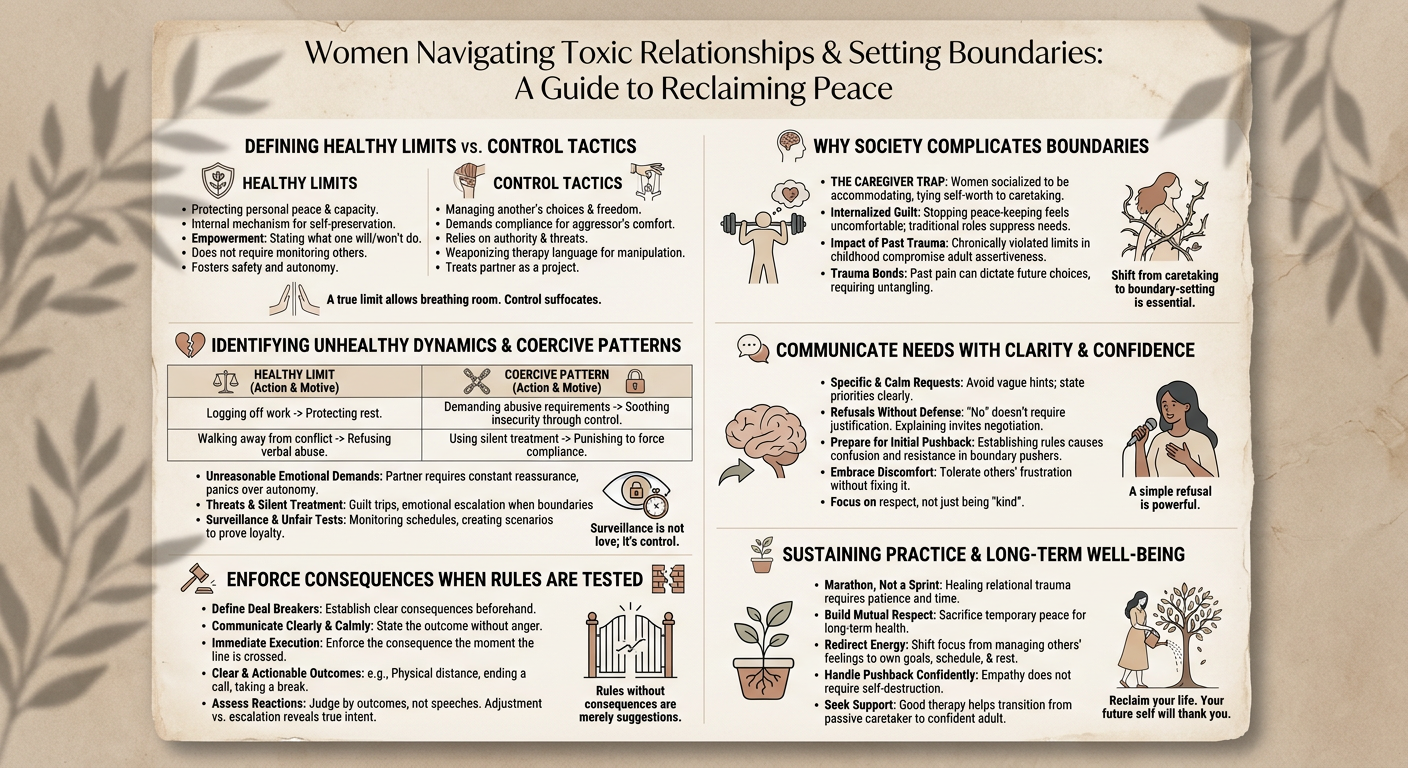
A woman learning to set limits is basically learning to protect her peace.
She decides what she can handle and what behavior simply will not work for her anymore. According to the foundational principles of Setting Boundaries as a Woman for Better Well-Being, this entire process revolves around managing personal capacity.
Protection Of Personal Peace
A true limit sounds like empowerment.
It involves stating what one will or will not do. It does not require a person to constantly monitor their husband or make someone prove they deserve basic respect. It is an internal mechanism designed to keep the self intact. A woman establishes these rules so she can actually breathe.
Signs Of Control Tactics
Control is something entirely different.
Control happens when an individual tries to run someone else’s choices. They treat a partner’s freedom like a project they need to manage. A healthy limit says someone cannot engage in an argument right now. Control demands that the other person must agree just so the aggressor feels okay. One fosters safety. The other relies heavily on authority and threats.
Misuse Of Fake Rules
Some people treat limits like a magic spell.
They assume they can declare a rule and everything will suddenly become peaceful. Even worse, people sometimes weaponize therapy language. They use fake rules as a selfish excuse to treat people poorly and label it personal growth. A rule that exists solely to punish a colleague or a partner is not a limit at all.
It is just a form of manipulation reframed as self-advocacy.
Why Do Societal Expectations Complicate Rules?
Society raises women to be accommodating. The world expects them to smile, smooth things over, and manage the emotional tone of every interaction.
The Caregiver Trap
Research on emerging adult women often highlights a necessary shift from a caretaking persona to a boundary-setting one. Many women tie their self-worth directly to a partner’s healing or how well they care for their children or parents. They act as the designated caregiver. They ignore their own exhaustion.
Fixing a broken dynamic requires recognizing that adults are ultimately responsible for their own happiness.
Burden Of Internalized Guilt
Stopping the peace-keeping mission feels incredibly uncomfortable.
Traditional gender roles expect women to suppress their needs. When they finally stop, they face crushing guilt. As experts discussing healthy boundaries in relationships consistently observe, maintaining these rules helps women avoid unhealthy connections despite the massive initial anxiety.
Impact Of Past Trauma
For many high-achieving women, the struggle is not intellectual. They know exactly what they should do.
The inability to act often stems from a relational trauma background. Chronically violated limits in childhood severely compromise a person’s assertiveness in adulthood. They carry a trauma response straight into their personal relationships. Healing means untangling those old trauma bonds so past pain stops dictating future choices.
Identify Unhealthy Dynamics And Coercive Patterns
Recognizing toxic relationships requires looking at the daily, steady erosion of dignity over time. It is rarely just one explosive conflict.
| Behavior Type | Action | Underlying Motive |
|---|---|---|
| Healthy Limit | Logging off work after work ends. | Protecting personal rest and wellbeing. |
| Coercive Pattern | Demanding abusive requirements without care for personal needs or boundaries. Can be manipulative | Soothing insecurity through strict control. |
| Healthy Limit | Walking away from a screaming match. | Refusing to participate in verbal abuse. |
| Coercive Pattern | Using the silent treatment for days to come | Punishing a partner to force compliance. |
Unreasonable Emotional Demands
A partner might require constant reassurance. They panic if a reply takes longer than a few minutes. They treat basic autonomy as a direct threat to the marriage or the relationship.
Threats And Silent Treatment
When a woman steps back, the environment often turns hostile. The partner uses guilt trips. They deploy the silent treatment to enforce compliance. They use emotional escalation as a means of control.
Surveillance And Unfair Tests
Some individuals use attachment as a convenient excuse to demand unrestricted access.
They monitor schedules. They create elaborate scenarios where a woman must prove her loyalty. This is not love. This is surveillance.
Communicate Needs With Clarity And Confidence
Setting rules is a messy process. The first attempt is rarely clean.
Some common pitfalls that even women who’ve done much personal development and inner work make include:
- Ignoring the reality of the situation and hoping a partner will magically change.
- Relying on vague hints instead of direct communication.
- Focusing too much on being perceived as kind rather than being respected.
Specific And Calm Requests
Women often overshoot when they finally get tired of feeling resentful.
They become too vague or highly defensive. With practice, they learn to make specific, calm requests. They stop expecting a coworker or a mother to magically guess their priorities.
Refusals Without Defensive Explanations
“No” does not require extensive justification.
Explaining too much invites unwanted negotiation. It suggests the refusal is up for debate. Women must learn to state their external limits without submitting a detailed justification. A simple refusal is powerful.
Preparation For Initial Pushback
Establishing a rule is like changing the locks on a door.
The first reaction from someone used to walking right in will be utter confusion. Then comes the anger. The boundary setter must expect this discomfort. Those who have benefited from an absence of limits are likely to resist when those limits are introduced.
Enforce Consequences When Partners Test Rules
Rules without consequences are merely suggestions.
- Define the specific deal breakers before the conversation begins.
- Communicate the outcome clearly without using an angry tone.
- Execute the consequence the exact moment the line gets crossed.
Clear And Actionable Outcomes
Boundary pushers will dismiss a woman’s needs. They will call her selfish. They will test the limits just to see what happens. Experts looking at managing toxic dynamics agree that if a rule is crossed, the promised outcome must occur immediately. This is where assertiveness training truly pays off.
Physical And Emotional Distance
Sometimes the only viable consequence is reducing access.
Stepping out of the room. Ending the phone call. Taking a severe break from the dynamic entirely. If a boss demands weekend work, turning off the phone creates necessary physical distance.
Assessment Of Partner Reactions
The aftermath reveals the truth.
Judge the situation by the outcomes, not the speeches. If a partner says they hear the request and they adjust, they are actively trying to coexist. If they claim they are facing rejection and escalate the argument, their real issue is lost access. They are mourning their loss of control.
How Do You Handle Pushback Confidently?
Pushback is an absolute guarantee.
When a woman stops being convenient, people get very upset. Coach Rhea Joy frequently highlights that individuals must tolerate the discomfort of others’ frustration. They cannot fold the second someone expresses disappointment.
Standing firm means watching someone respond with disproportionate frustration and deciding not to fix it. Empathy does not require self-destruction.
Sustain Practice For Long-Term Well-Being
This work represents a marathon.
A person cannot expect to master boundary work overnight. Licensed therapist Annie Wright often points out that healing relational trauma histories requires profound patience. A woman might sacrifice some temporary peace to build a life of genuine mutual respect. She learns from her boundary difficulties and refines her approach over time.
The energy spent worrying about another person’s feelings is finally redirected toward her own goals. She reclaims her schedule. She protects her rest. Good therapy addresses these core deficits, helping individuals transition from passive caretakers into confident adults.
FAQ
Why do boundaries sometimes feel like a betrayal to my partner? When someone is entirely used to getting whatever they want, any new restriction feels like a punishment. They are accustomed to full access. Your new limit disrupts their comfort zone.
Is it normal to feel guilty after saying no? Absolutely. Society conditions women to feel responsible for everyone else. Guilt is just a lingering symptom of old habits leaving the body. It fades as you build real resilience.
How can a woman respond when someone consistently refuses to respect her limits? You stop explaining and start enforcing. You remove yourself from their presence. You strictly limit their access to your time and your energy. You let their bad behavior remain their problem.
Conclusion
Navigating toxic relationships requires women to stop trading their wellbeing for someone else’s comfort.
Setting firm limits is a necessary act of survival. Women who embrace this practice stop living on standby. They stop absorbing the endless stress of others. They step into a life defined by their own choices, their own peace, and their own unbreakable standards.
The friction they face along the way simply proves the old dynamic was never working in the first place. Keep going. Keep testing your limits. Your future self will thank you.